In aerospace component manufacturing, “precision” has never been simply a matter of numbers.
From engine components and structural parts to various fasteners and precision-formed components, aerospace parts are typically manufactured under stringent requirements for dimensional accuracy, geometrical tolerances, and surface quality. Particularly in forming processes such as stamping, extrusion, drawing, and cold heading, dies directly participate in material deformation. Their cavity dimensions, working profiles, and surface conditions can all affect the final product. Therefore, in aerospace manufacturing, dies must not only be manufactured with high precision, but must also maintain dimensional stability throughout long-term production.
Aerospace components are manufactured from different materials and through different forming processes. Some materials have high strength, while others place strict requirements on surface quality. Certain forming operations can also generate significant forming forces. If the die material is not properly selected, even a die that meets the required dimensional accuracy when new may gradually lose dimensional stability during production due to wear, chipping, or deformation.
This is why high-precision dies are not simply about choosing the hardest material available.
For cemented carbide, hardness, wear resistance, transverse rupture strength, and toughness need to be properly balanced. Applications involving severe wear require higher wear resistance, while forming processes subject to greater impact loads place more emphasis on toughness and resistance to edge chipping or fracture.
The right carbide grade for precision manufacturing should therefore be selected according to the workpiece material, forming process, loading conditions, and required die life.
This is one of the areas where the technical expertise of a carbide die manufacturer is truly put to the test.
Many people assume that the key to high-precision dies is simply the use of high-precision finishing equipment.
In reality, for cemented carbide dies, final dimensional accuracy is influenced by the entire manufacturing process.
Starting with the raw material, powder characteristics and consistency can affect subsequent pressing and sintering. During sintering, temperature, atmosphere, and process parameters can influence the carbide's microstructure and dimensional condition. Subsequent precision machining then determines the final geometrical accuracy and surface quality of the die.
If the material and sintered condition are inconsistent at the earlier stages, it is difficult to achieve truly stable results even with advanced precision machining equipment.
Therefore, the core capability of a high-precision carbide die manufacturer is not simply having advanced machining equipment, but rather the ability to integrate material development, sintering technology, precision machining, and quality control into one stable manufacturing process.
This is also why ZCCF Tungsten Carbide has always placed material development and manufacturing at the center of its capabilities.
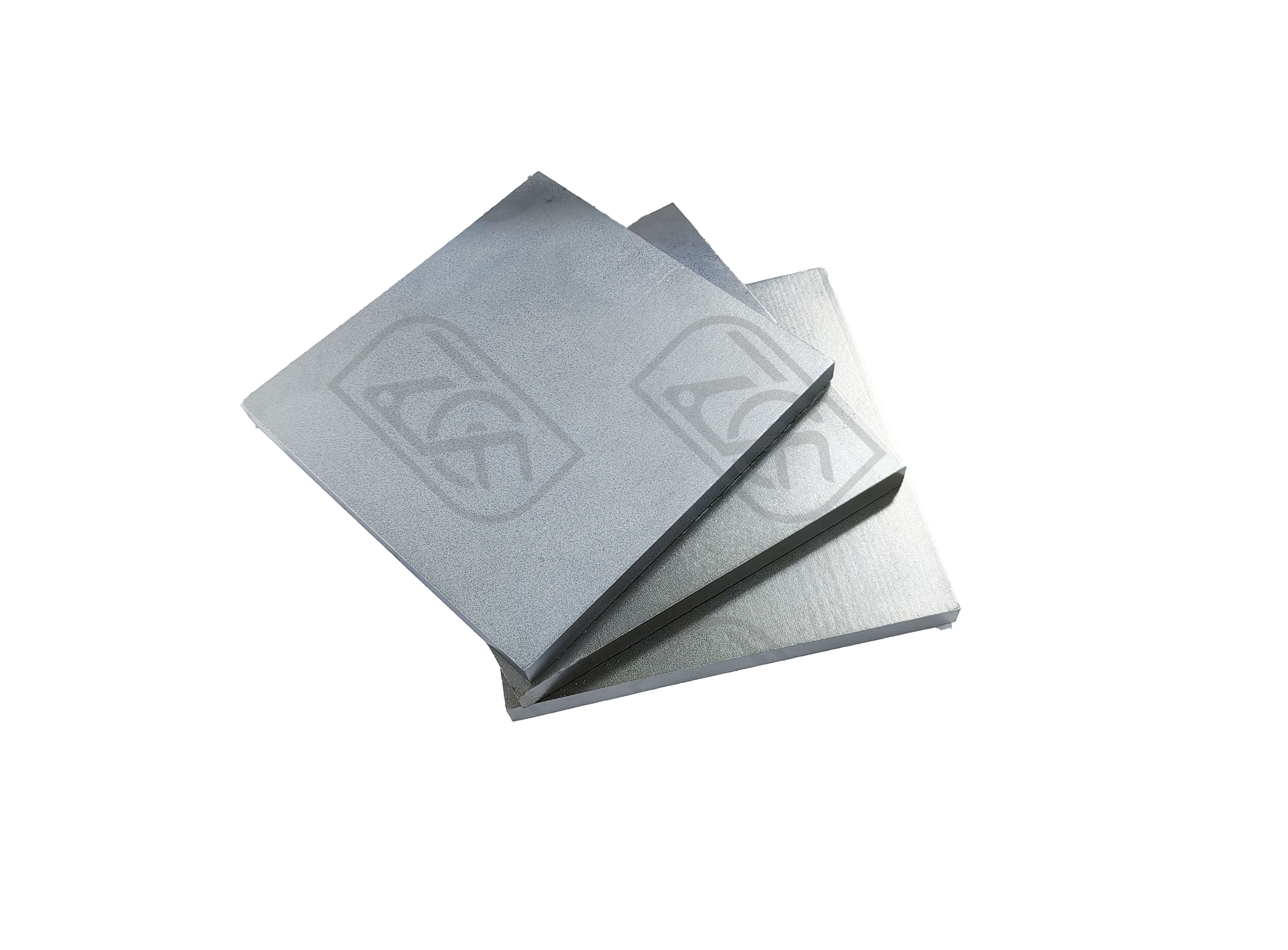
As a manufacturer with its own production facility, ZCCF Tungsten Carbide does not simply purchase cemented carbide and then machine it into dies. The company focuses on the development and manufacturing of tungsten carbide die materials as a core business, while also manufacturing tungsten carbide dies. This allows the material production process and subsequent die manufacturing process to be controlled within the company, creating a closer connection between material properties, machining processes, and final die performance.
Currently, ZCCF Tungsten Carbide offers 70+ tungsten carbide grades, including both standard grades and non-standard grades developed for specific applications. For precision forming, this provides greater flexibility in selecting and matching carbide grades according to the workpiece material, forming pressure, and operating conditions, rather than relying on one material grade for different applications.
In terms of manufacturing, ZCCF Tungsten Carbide uses equipment from Japan and Taiwan, combined with its own manufacturing expertise and process control. The company has also developed its own vacuum sintering furnaces and applies processes such as deep cryogenic tempering to carbide material treatment, aiming to further improve the internal condition and dimensional stability of the material.
The combination of carbide material manufacturing and die manufacturing also gives ZCCF Tungsten Carbide greater flexibility when dealing with complex die requirements.
For example, when a customer encounters abnormal wear, edge chipping, or insufficient die life during actual production, the solution does not necessarily have to come from changing the die geometry alone. The carbide grade, the balance between hardness and toughness, the sintered condition, and subsequent machining processes can all become potential areas for optimization.
Because ZCCF Tungsten Carbide controls both the material and die manufacturing processes, it can look for solutions from both the material and die perspectives, rather than simply attributing the problem to “machining tolerances.”
What truly tests a die in aerospace component manufacturing is not simply how precise it is when it leaves the factory, but whether it can maintain stable performance after continuous production.
This requires the die to have good dimensional stability, wear resistance, and resistance to damage. It also requires the manufacturer to control the entire production process, from material selection, sintering, and heat treatment to precision machining and final inspection.
This is also the direction in which ZCCF Tungsten Carbide continues to develop its manufacturing capabilities.
With tungsten carbide die materials as its core business, ZCCF Tungsten Carbide also manufactures tungsten carbide dies for a wide range of metal forming applications, including cold heading, hot forging, warm forging, stamping, extrusion, drawing, and tube drawing. For applications such as aerospace component manufacturing, where die stability is particularly important, ZCCF Tungsten Carbide can match material grades and die solutions according to specific operating conditions, providing an integrated solution from material selection to die manufacturing.
Aerospace manufacturing does not allow for “close enough” when it comes to precision. What matters is whether the die is truly matched to the application.
For a die manufacturer, real expertise is not simply about achieving extremely tight tolerances. It is about understanding the relationship between material, forming process, and operating conditions, and using that understanding to keep the die stable throughout actual production.
High precision is the result. Stable manufacturing is the foundation.
ZCCF Tungsten Carbide focuses on tungsten carbide die materials and tungsten carbide die manufacturing, using material development as the foundation and manufacturing technology as the core to provide better-matched carbide solutions for high-precision metal forming applications.
(+86)18962368366
(+86)18962328299
ping.wu@cszccarbide.com
yan.feng@@cszccarbide.com
No.4 Xiaoshanjing Road, Zhitang Town, Changshu City, Jiangsu Province, China