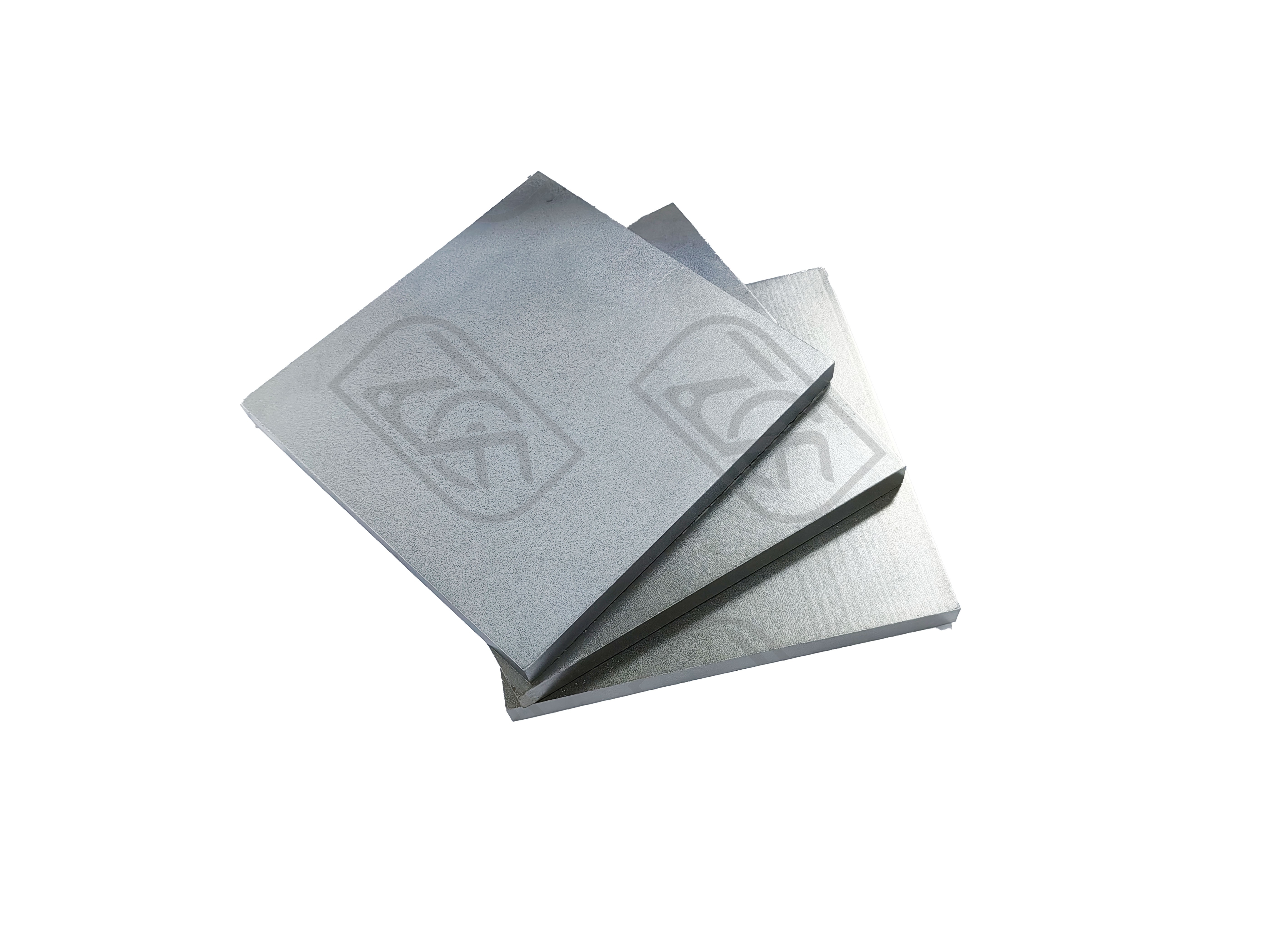
At the heart of precision manufacturing lies the cold, hard tungsten carbide mold—the "mother of steel" from which countless modern industrial products are born. From minute electronic components to critical automotive parts, all rely on the precise shaping of molds. The soul and longevity of these molds are determined by the very "pedigree" of their base material: tungsten carbide. In the production of tungsten carbide mold materials, the choice between "virgin material" and "recycled material" is far more than a simple cost calculation. It represents a profound dialogue concerning material purity, performance limits, and industrial reliability. Virgin material, with its innate "noble lineage," demonstrates irreplaceable superiority in this dialogue, forming the indispensable backbone supporting high-end manufacturing.
Virgin material refers to tungsten carbide produced directly from primary minerals like tungsten and cobalt through their first cycle of purification, chemical processing, and metallurgy. It is like an uncut gem, its composition and structure controlled with precision from the very origin. Recycled material, in contrast, is primarily produced by reclaiming, crushing, reprocessing, and re-sintering used hard alloy products. Their fundamental difference begins with their "bloodline."
The superiority of virgin material is first and foremost founded on its unmatched chemical purity and compositional precision. Starting from high-grade wolframite or scheelite ore, through complex hydrometallurgical and carburization processes, the resulting tungsten carbide powder achieves extremely high purity, with harmful impurity elements (such as phosphorus, sulfur, calcium) controlled at minimal levels (often in the range of mere tens of parts per million). Similarly, the cobalt powder used as the binder phase possesses comparable purity. This cleanliness, starting at the atomic scale, provides the prerequisite for the material to subsequently develop a uniform and stable microstructure. In contrast, the source of recycled material is complex. Although modern recycling technologies (such as the zinc melt process) can effectively separate tungsten carbide and cobalt, they struggle to completely eliminate trace impurities introduced during prior use and recycling, as well as potential residues of other alloying elements. These "hereditary" impurities act like micro-fractures within the material matrix, becoming latent weaknesses that can lead to performance degradation.
Chemical purity translates directly into superior and uniform physical and mechanical properties. Virgin tungsten carbide, benefiting from its pure raw materials and advanced manufacturing processes (such as spray drying, vacuum sintering), achieves uniform growth of tungsten carbide grains and seamless distribution of the cobalt phase. This highly homogeneous microstructure grants it higher hardness, better wear resistance, superior flexural strength, and more stable thermal conductivity and coefficient of thermal expansion. For molds, this means maintaining extreme dimensional stability under the harsh conditions of long-term high pressure, high temperature, and severe friction. It equips them with a stronger ability to resist plastic deformation and wear, thereby ensuring that millions of stamped or molded parts are produced with consistent precision. Recycled material, due to micro-inhomogeneities in composition and structure, often exhibits fluctuations or ceiling limitations in its performance indicators, particularly in critical areas like impact toughness and high-temperature red hardness, making it difficult to meet the reliability demands of extreme applications.
Uniformity and superiority in performance ultimately lead to unquestionable reliability and longer service life. For high-precision molds, especially those used for critical aerospace components, high-end automotive body panels, precision electronic connectors, or medical device molding, any minor failure can lead to catastrophic consequences or massive quality losses. Virgin tungsten carbide, with its consistent "from-core-to-surface" quality, provides the mold with comprehensive and utterly reliable mechanical integrity. Its extended service life, while involving a higher initial investment, results in a lower cost per molded part and reduces the risk of production interruptions caused by unexpected mold failure, offering significant comprehensive economic benefits and safety assurance. Recycled material, potentially harboring internal flaws, is more susceptible to developing micro-cracks under cyclical stress, leading to unpredictable premature failure of the mold.
However, advocating for the superiority of virgin material does not mean negating the value of recycled material entirely. In certain mid-to-low-end mold applications or for non-critical parts where performance requirements are more lenient and cost sensitivity is high, quality-controlled recycled material is an effective way to achieve resource recycling and cost reduction. Yet, it is crucial to recognize that the application boundaries of the two are delineated by their intrinsic "bloodline." Using recycled material in ultra-precision, high-stress top-tier molds is akin to a gamble.
From a broader perspective, the insistence on virgin material reflects the modern industry's unrelenting pursuit of material limits and absolute reliability. It symbolizes the craftsman's spirit of controlling quality from the source, aligning with the inherent drive of high-end manufacturing towards greater precision, efficiency, and reliability. Each choice to use virgin tungsten carbide is a solemn commitment to the very "foundation" of an industrial product.
Therefore, in the realm of tungsten carbide mold materials, virgin and recycled materials are like royalty and commoners, each with their own domain. Yet, in the cutting-edge fields that define industrial excellence, only virgin material—with its pure pedigree and exceptional innate properties—can bear the immense responsibility tied to precision, longevity, and safety. It is not merely the physical substance forming the mold; it is the "soul of metal" that upholds the backbone of modern precision manufacturing. On the path to pursuing ultimate performance, the "origin" of a material is never a negligible detail; it is the fundamental starting point that determines its ultimate destiny.
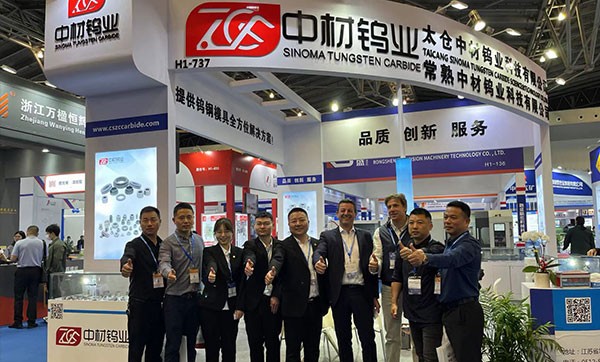
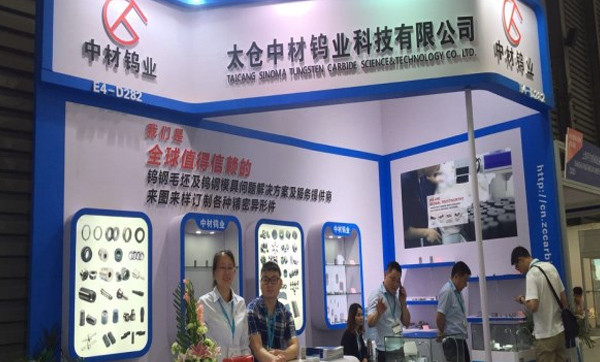
Understanding profoundly that virgin materials provide the "pure pedigree" and "reliable backbone" for superior performance, ZCCF Tungsten Carbide steadfastly adheres to the principle of using 100% virgin materials. This is far more than a simple sourcing decision; it is a firm commitment to ultimate performance and industrial reliability.
(+86)18962368366
(+86)18962328299
ping.wu@cszccarbide.com
yan.feng@@cszccarbide.com
No.4 Xiaoshanjing Road, Zhitang Town, Changshu City, Jiangsu Province, China