In the fields of precision manufacturing and die/mold engineering, high accuracy internal bore machining has long been recognised as one of the most challenging processes to stabilise. When tolerances enter the micron (µm) range, even minor deviations are magnified, directly compromising die life, assembly fit, and part-to-part repeatability.
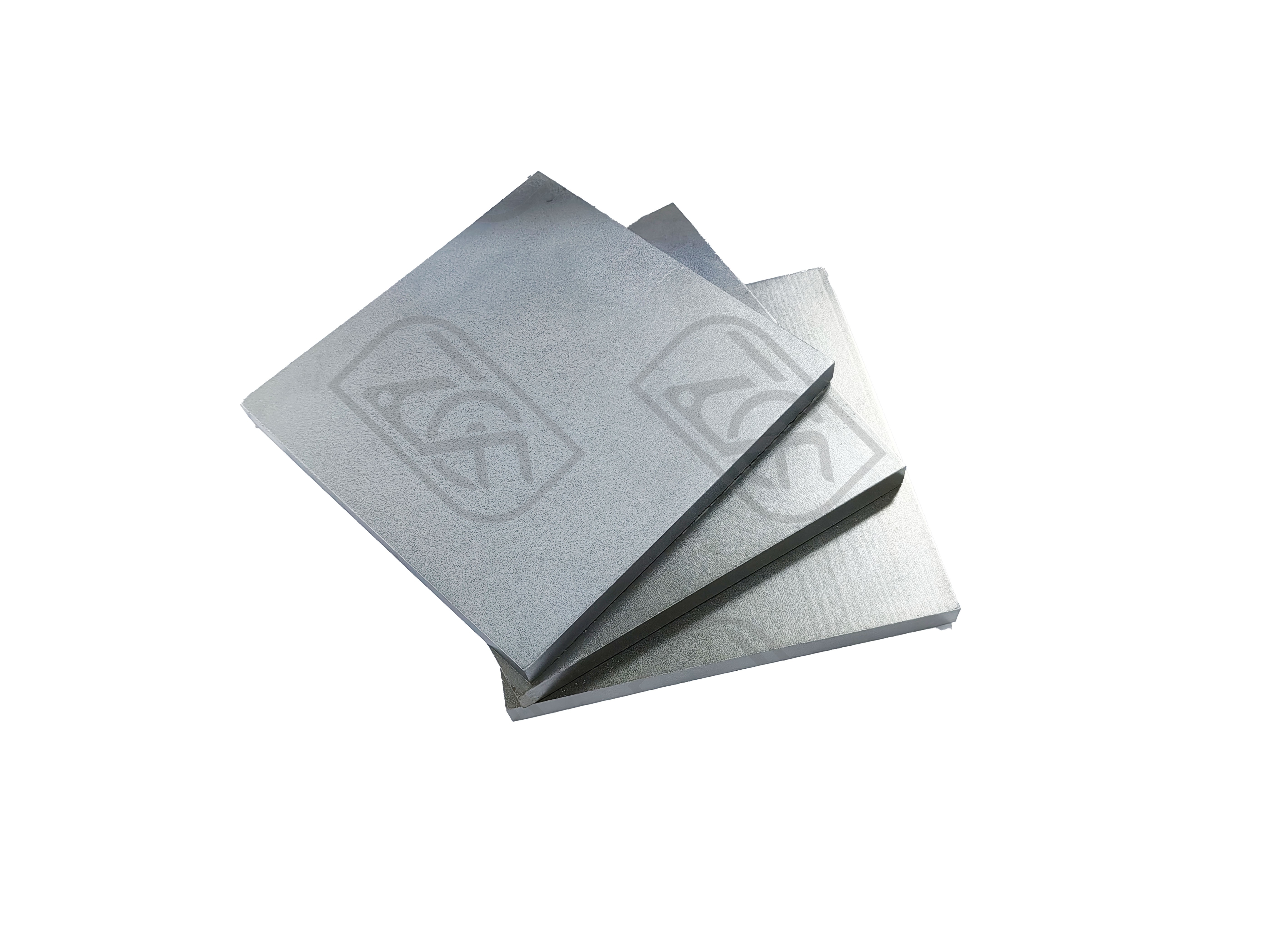
For enterprises specialising in high performance tungsten carbide die materials, such machining difficulties fundamentally underscore the intrinsic link between material behaviour and process robustness. ZCCF Tungsten Carbide, a company with longstanding expertise in R&D and production of precision tungsten carbide die materials, has accumulated substantial practical engineering knowledge on this subject.
I. Bore Geometry – Why Is It Inherently More Difficult Than External Contours?
The primary difficulty in bore machining stems from its enclosed geometry. The cutting zone is confined within the workpiece, making the chip-formation and tool-contact conditions difficult to observe or adjust in real time. This lack of visibility allows errors to accumulate progressively throughout the operation.
Moreover, bore machining typically relies on slender tooling or deep-hole drilling systems, where insufficient static and dynamic stiffness exacerbates chatter and vibration. This results in circularity error, taper deviation, and surface undulation .
In die applications, such minute inaccuracies directly impair the functional life of critical features—ejector pins, guide bores, and precision-fit holes. ZCCF Tungsten Carbide pays close attention to this “geometric amplification effect” during material design, recognising its decisive influence on final component accuracy.
II. The Primary Adversaries of Micron-Level Precision: Thermal Effects and Residual Stress
Once machining tolerances shrink to the micron scale, precision is no longer governed solely by machine tool capability; rather, it becomes a function of the coupled thermo-mechanical behaviour of both the material and the machining environment.
Cutting-zone heat generation, thermal growth of the machine structure, and stress relaxation from fixturing all induce minute dimensional alterations in the bore during processing. These changes are imperceptible to the naked eye, yet they are fatal for high-precision mating assemblies.
Consequently, advanced die manufacturing increasingly relies on a thermally and dimensionally stable material substrate rather than on machine specifications alone. Through optimisation of the tungsten carbide's microstructural integrity and thermal stability, ZCCF Tungsten Carbide enhances the material's ability to retain bore geometry under fluctuating thermal and mechanical loads.
III. Material Homogeneity – The Decisive Factor in Machining Consistency
Many practitioners focus on machine capability while overlooking a more fundamental variable: the intrinsic uniformity of the workpiece material.
If the material contains microstructural heterogeneities or density gradients, the cutting resistance becomes non-uniform during machining. This leads to fluctuating tool loads, which ultimately manifest as diameter instability or out-of-roundness in the finished bore.
For high-precision tooling, this problem is especially pronounced in mass production: the first article passes inspection, but subsequent batches show progressive drift—a classic symptom of inconsistent material response.
ZCCF Tungsten Carbide addresses this through rigorous process control in powder metallurgy and sintering, achieving superior densification and compositional uniformity, thereby eliminating sources of variation at the material level before machining begins.
V. The Ultimate Challenge: Long-Term Process Capability
In an industrial production environment, the true measure of high precision bore machining is not one-off feasibility, but sustained capability over extended runs.
Machine condition, process parameter drift, and batch-to-batch material variations all contribute to final-part scatter. Without a stable material baseline, even the most advanced machining centre cannot guarantee consistent output.
Hence, the competitive edge in high-end die manufacturing is shifting—from maching-centric capablity to matarial-centric stability.
ZCCF Tungsten Carbide adopts this perspective by delivering high-performance tungsten carbide die materials that provide downstream manufacturers with a reliable, reproducible substrate, enabling robust micron-level production.
Conclusion
The difficulty of high-precision bore machining is not a single-factor technical problem; it is the synergistic outcome of material performance, machining process design, thermal/environmental control, and metrology systems.
Only when material stability and the entire machining system are co-optimised can true long-term, repeatable micron-level accuracy be achieved.
(+86)18962368366
(+86)18962328299
ping.wu@cszccarbide.com
yan.feng@@cszccarbide.com
No.4 Xiaoshanjing Road, Zhitang Town, Changshu City, Jiangsu Province, China