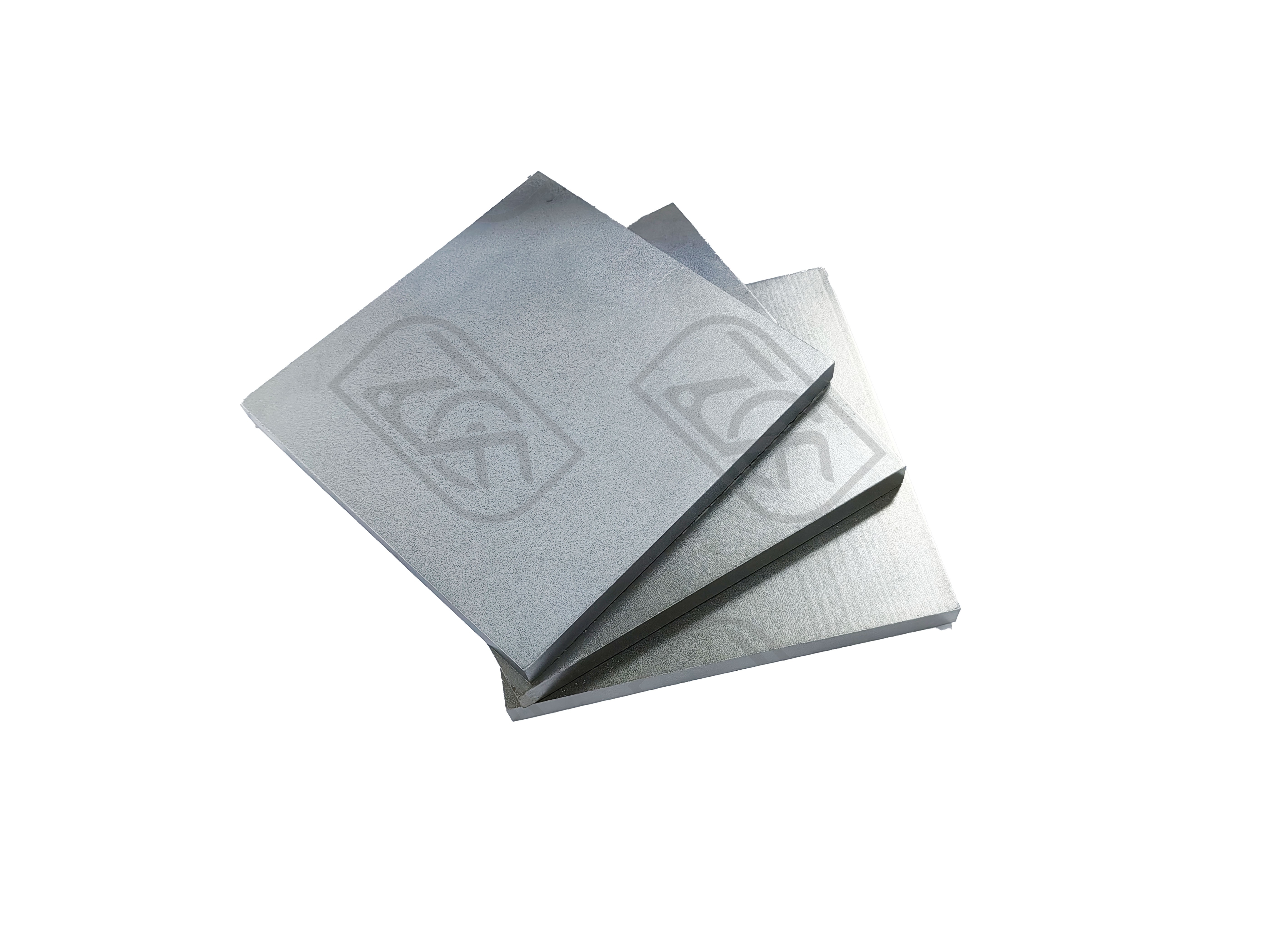
In the mold manufacturing industry, a saying goes: The life of a mold is 30% dependent on processing and 70% on materials. tungsten carbide (cemented carbide), as the "teeth" of modern industry, its performance directly determines the precision, lifespan, and final product quality of the mold. For purchasers, when facing numerous suppliers, a seemingly simple yet profoundly meaningful evaluation criterion emerges: How many tungsten carbide grades does this manufacturer offer?
A manufacturer capable of providing a rich, diverse, and finely differentiated selection of tungsten carbide grades is often more trustworthy than one with a limited grade portfolio, and the mold materials they produce are generally superior. Behind this lies a comprehensive embodiment of technical strength, market experience, and application depth.
tungsten carbide is not a single monolithic metal but a family of composite materials produced through powder metallurgy. Its basic properties are determined by two core elements: the hard phase (tungsten carbide) and the binder phase (usually cobalt) . By varying the cobalt content, the grain size of tungsten carbide (from micron to sub-micron, ultra-fine), and adding rare metals like tantalum carbide or niobium carbide, a vast array of material grades with vastly different properties can be obtained.
The fundamental reason a superior manufacturer develops numerous grades lies in the fact that the working environments of molds are endlessly varied.
﹡Stamping an electronic component connector versus cold heading a 10mm diameter steel screw – the stress, impact force, and wear mechanisms experienced by the mold are completely different.
﹡Drawing a wire 0.1mm in diameter versus extruding an automotive part – the requirements for the material's wear resistance, transverse rupture strength, and toughness are entirely distinct.
﹡If a manufacturer only offers a few general-purpose grades (like the common YG8, YG15, YG20), they can only provide "roughly applicable" materials. For example, YG8 offers good wear resistance but lower strength, suitable for cold stamping non-ferrous metals under low stress; whereas YG20C, with higher cobalt content, provides high strength and impact resistance, making it suitable for cold heading dies under heavy loads and significant stress.
Manufacturers with extensive grade libraries, however, can offer "precisely matched" solutions. They can provide materials ranging from 3% to 30% cobalt content and grain sizes from 0.2 microns to 10 microns tailored to different working conditions. For instance, to address molds susceptible to electrical discharge machining (EDM) damage, they develop specialized grades like Kennametal's CD-KR887, which withstands extreme EDM environments and offers 100 times the corrosion resistance of standard alloys. This is not merely about quantity but reflects a profound understanding of complex application scenarios.
The ability to produce or consistently supply numerous grades is, in itself, a significant technical hurdle that directly reflects the manufacturer's core technological capabilities.
Firstly, it demonstrates the manufacturer's precise mastery of the composition-structure-property relationship. From the purity and particle size distribution of tungsten carbide powder to the mixing of the cobalt binder, every subtle adjustment in formulation corresponds to nuanced changes in the final product's hardness, wear resistance, toughness, and transverse rupture strength. Managing this complexity implies a strong R&D team and long-term accumulation of experimental data.
Secondly, it requires the manufacturer to possess advanced and stable production processes. Sintering is critical for tungsten carbide, especially for high-performance grades. Processes like sinter-HIP (hot isostatic pressing) are needed to eliminate porosity and enhance material density and strength. Top-tier international manufacturers like Kennametal even exercise full control over the entire process chain, from ore processing to finished sintering, to ensure every step meets stringent standards for specific grades – a level of control unattainable by smaller players or traders.
Furthermore, it reflects the manufacturer's quality consistency. Managing numerous grades means frequent changes in production line recipes and parameters, placing extremely high demands on production management, process control, and quality inspection systems (e.g., ultrasonic testing, hardness testing). A manufacturer capable of consistently producing a wide range of grades with uniform performance undoubtedly possesses a rigorously refined quality management system.
Ultimately, the primary beneficiary of a manufacturer's extensive grade portfolio is the mold user.
On one hand, it enables "prescribing the right remedy" . Users can precisely select the most suitable grade based on their specific workpiece material (e.g., ordinary steel, stainless steel, non-ferrous metals), processing method (stamping, drawing, cold heading), and stress state. This precise matching directly results in a significant increase in mold life, potentially reaching 3 to 5 times that of general molds.
On the other hand, it provides proactive solutions. Excellent suppliers don't just sell materials; they leverage their rich grade resources to become "technology partners" for their clients. When customers encounter problems like mold cracking or excessive wear, they have the capability to search their extensive grade library for more promising alternatives or even develop custom new materials by fine-tuning compositions and processes to help solve production bottlenecks.
China accounts for over 40% of the world's cemented carbide production, yet its share of global sales revenue is less than 20%. A core reason is the scarcity of high-performance, high-value-added grades. Therefore, when evaluating a tungsten carbide mold material manufacturer, the number of grades they offer is far more than just a marketing figure.
More grades signify a deeper understanding of applications; finer differentiation signifies more refined technology and processes. Choosing such a manufacturer means selecting a partner equipped with a deep "material library" and rich "practical experience." What they provide is not just a piece of alloy, but a deterministic solution, precisely calculated and validated, to maximize your mold's performance and lifespan. This is the true meaning behind the assertion "more grades lead to better materials."
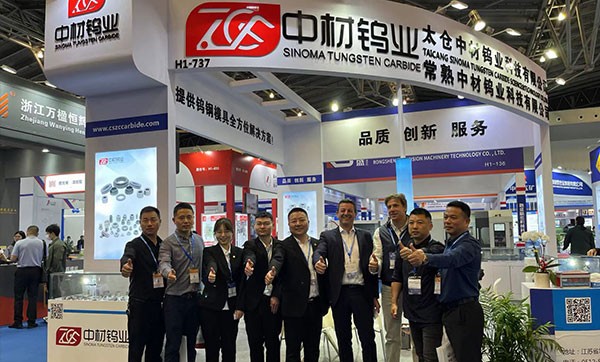
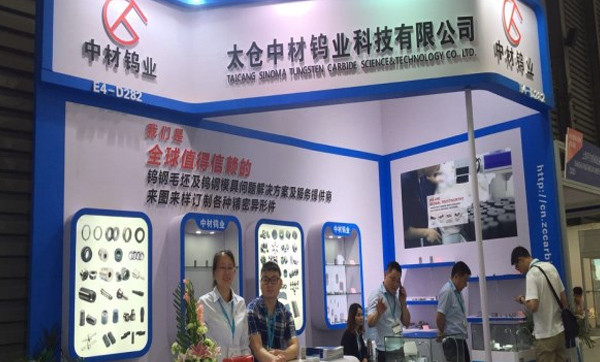
With over 60 tungsten carbide grades, ZCCF Tungsten Carbide offers over 60 solutions. Committed to precisely matching every one of your application scenarios with our rich product matrix. We look forward to your inquiry!
(+86)18962368366
(+86)18962328299
ping.wu@cszccarbide.com
yan.feng@@cszccarbide.com
No.4 Xiaoshanjing Road, Zhitang Town, Changshu City, Jiangsu Province, China