In modern industrial manufacturing, many enterprises encounter a persistent question: with the same equipment, same materials, and same production parameters, why can some molds continuously produce hundreds of thousands of parts, while others frequently suffer from cracking, wear, and premature failure?
On the surface, differences in mold life might be attributed to material cost, machining accuracy, or service environment. However, based on practical production experience, the decisive factors are often hidden in every detail of material selection, manufacturing processes, and quality control.
I.The Foundation of Mold Life: Does Material Performance Match the Working Conditions?
As critical components in production, molds are subjected to long-term high pressure, high friction, elevated temperatures, and cyclic impact loads. For example, cold-heading dies, stamping dies, and drawing dies all endure enormous compressive and fatigue stresses during operation.
Taking high-strength fastener production as an example—during the forming of 10.9-grade and 12.9-grade high-strength screws, the instantaneous pressure on the mold can reach several thousand megapascals. If the hardness of the cemented carbide material is insufficient, the working surface will wear rapidly; if the toughness is inadequate, edge chipping, cracks, or even complete fracture may occur.
Therefore, an excellent mold material does not simply pursue "harder is better," but seeks an optimal balance among hardness, transverse rupture strength, toughness, and wear resistance.
Different working conditions require different grades of cemented carbide. For instance, high-speed progressive stamping places greater emphasis on wear resistance and dimensional stability, whereas cold-heading environments subjected to severe impact demand higher impact resistance and fracture toughness.
II.Manufacturing Consistency Determines the Upper Limit of Mold Life
Many users find that even when purchasing molds made from the same material and same specification, different batches still exhibit life variations.
The reason is that cemented carbide molds are not simply "sintered and ready to use." Every step—from powder mixing, pressing, and sintering to precision finishing and surface treatment—affects the final performance.
For example, whether the internal microstructure of the carbide is homogeneous, whether grain size is stable, and whether porosity is adequately controlled all directly influence mold performance under high-load conditions.
If the material contains internal micro-defects, these defects may gradually propagate under long-term cyclic impact, eventually leading to sudden mold failure.
Thus, high-quality molds require not only premium raw materials but also a rigorously controlled production system to ensure consistent performance across every piece.
III. Machining Precision Affects Actual Service Life
Beyond the material itself, machining precision is equally critical to mold longevity.
The dimensional accuracy of the working zone, surface roughness, fillet design, and fit clearances all affect the stress distribution during production.
Insufficient machining precision leads to uneven local stress, causing stress concentration. For example, excessive pressure on the mold edge accelerates crack initiation; excessive surface roughness increases friction, degrades product surface quality, and shortens mold life.
Therefore, a long-life mold relies not only on good material but also on precise machining capabilities to fully realize the material's potential.
IV. Rigorous Inspection Is an Essential Link to Ensuring Consistent Life
The uncertainty in mold life often stems from subtle variations during production.
Professional mold manufacturers employ comprehensive quality control measures—including hardness testing, density measurement, metallographic analysis, and dimensional inspection—to thoroughly evaluate each product.
Through systematic inspection, potential issues can be detected early, reducing the risk of unplanned downtime and batch quality problems during customer production.
A truly excellent mold supplier does not merely deliver a product; they help customers improve production efficiency and reduce overall manufacturing costs.
V. Choose a Reliable Supplier to Maximize Mold Value
In today's competitive manufacturing landscape, mold life is not only a measure of product quality but also directly impacts production efficiency and profitability.
A 30% increase in mold life translates into fewer stoppages, fewer tool changes, lower labor costs, and more stable product quality.
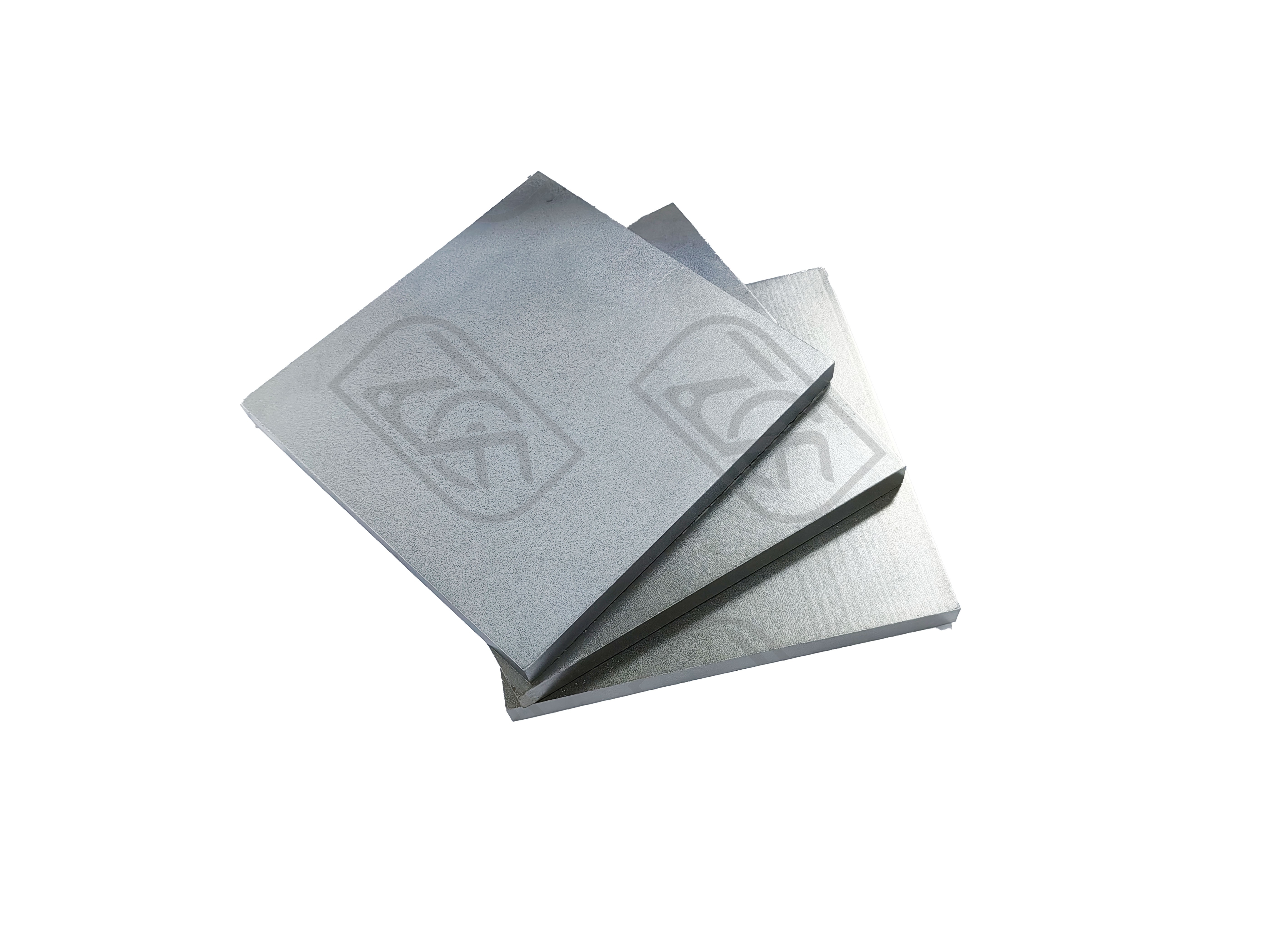
ZCCF Tungsten Carbide specializes in the R&D and manufacturing of high-performance tungsten carbide materials for mold applications.Committed to using premium raw materials, we ensure product consistency through strict production protocols and multi-stage inspection standards.
For diverse applications—cold heading, stamping, drawing, and precision forming—ZCCF Tungsten Carbide provides tailored carbide grades matched to specific working conditions, helping customers reduce mold wear and improve production efficiency.
Under identical working conditions, the gap in mold life often comes from invisible details.
From material selection, to manufacturing processes, to quality control—every step of perseverance ultimately translates into more stable and efficient performance on the production line.
Choose the right material, choose a reliable manufacturing partner, and let every mold create greater value.
(+86)18962368366
(+86)18962328299
ping.wu@cszccarbide.com
yan.feng@@cszccarbide.com
No.4 Xiaoshanjing Road, Zhitang Town, Changshu City, Jiangsu Province, China