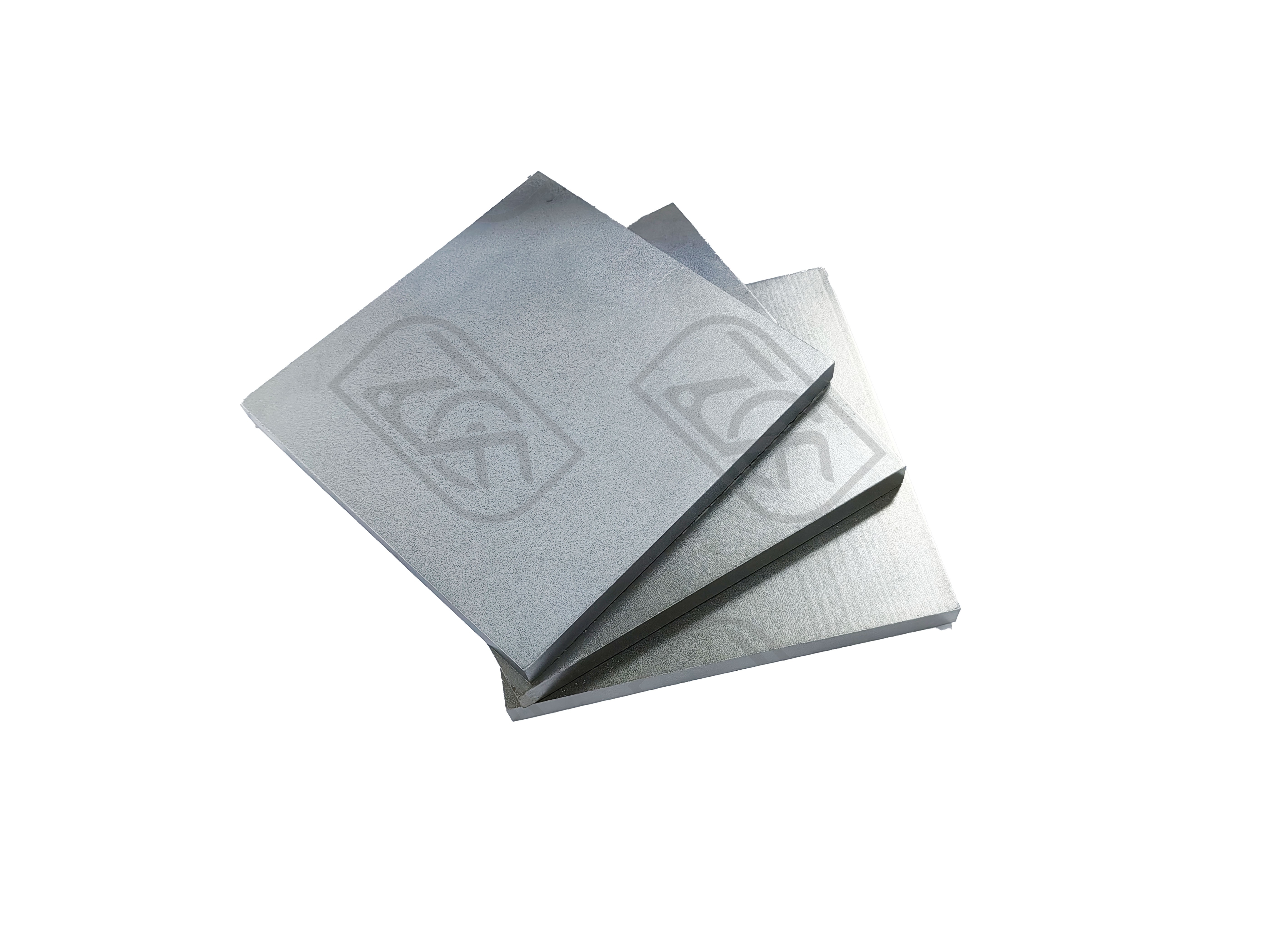
Many mold factories tend to focus on "visible parameters" such as material grade and hardness when selecting materials, often overlooking a critical aspect: the quality starting point of the mold blank. In fact, the lifespan, stability, and machining efficiency of a mold are already largely determined at the blank stage.
A truly high-quality tungsten carbide blank is not just "a piece of hard material"—it is a systematic integration of material + process + application suitability.
1. Formulation Is More Than Just “Proportioning”
Behind an excellent blank lies a mature formulation system validated through extensive real-world applications. We maintain a library of 70+ material formulations, enabling precise balancing of wear resistance, toughness, and heat resistance tailored to different scenarios such as cold heading, stamping, and warm forging—rather than simply increasing hardness.
2. Sintering: The Invisible “Technical Black Box”
The uniformity, density, and residual stress of the blank are directly determined by the sintering process. We employ self-developed vacuum pressurized sintering furnaces with full-process temperature control systems, ensuring hardness variation ≤ 0.1 HRA per batch. This eliminates early-stage chipping or wear caused by density inconsistencies at the root.
3. Pre-forming: An Underestimated “Efficiency Lever”
High-quality blanks can be produced using near-net shape processes, with machining allowances controlled within 0.3mm. This directly helps customers reduce machining time by over 20%, lower tool wear, and avoid micro-crack risks caused by excessive machining stress.
4. Testing Goes Beyond “Qualified”
From powder to finished product, we conduct 12 key inspections including metallographic analysis, density gradient, cobalt magnetism, and hardness distribution, accompanied by test reports. This ensures the blanks are “traceable and predictable,” not just “qualified.”
Industry Note:
Recently, prices of raw materials such as tungsten carbide powder and tungsten powder have continued to rise. Some suppliers may adjust formulation ratios or simplify sintering processes to maintain profit margins, often at the cost of product consistency and lifespan.
(+86)18962368366
(+86)18962328299
ping.wu@cszccarbide.com
yan.feng@@cszccarbide.com
No.4 Xiaoshanjing Road, Zhitang Town, Changshu City, Jiangsu Province, China