First, extremely high unit extrusion pressure. Statistics show that cold-extrusion dies for high strength steel materials endure an average working stress of up to 2500 MPa, with local stress increased by an additional 10%–20% due to random loading. This means that the die cavity surface must maintain dimensional stability under sustained high pressure—any slight deformation will lead to part dimensional deviations.
Second, fatigue risk under high impact loads. Cold heading dies are subjected to severe impact loads, and the die cavity surfaces bear very high compressive stresses. Therefore, the die material is required to have high surface hardness to resist wear, while the core must possess sufficient toughness to absorb impact energy and prevent brittle fracture. The inherent conflict between hardness and toughness remains the core challenge in die material selection.
Third, complex cavity geometries and tight tolerances. High strength screws often incorporate features such as flange-face anti-loosening serrations, internal hexagon/12-point sockets, and reduced shank sections. For example, in forming anti-loosening teeth on the screw head, the bottom face of the die must be equipped with precisely arranged radial forming grooves, and venting structures must be designed to ensure complete material filling. The machining precision of these micro-features directly determines product quality, and if the surface roughness of the die working zones does not meet requirements, they can easily become stress raisers and initiation sites for fatigue cracks.
Fourth, thermo-mechanical coupling and wear. Although cold heading is nominally performed at ambient temperature, the heat generated by plastic deformation in high-speed continuous production accumulates on the die surface, causing a reduction in die material hardness and wear resistance. Moreover, oxide scales or hard particles on the surface of high-strength materials can induce abrasive wear on the die, accelerating cavity dimensional failure.
Fifth, performance gap between tooling from different countries. Historical comparative data show that for cold-heading cemented carbide dies for small-diameter screws (below M5), Japanese dies achieve service lives of 7–9 million pieces, while domestic dies of the same period only reached 2–3 million pieces, with notable inconsistency in quality stability. Behind this gap lie multiple factors including die structural design, grade selection, interference fit control, and surface finishing quality. Although domestic technology has made significant progress in recent years, tooling materials for high-strength and high-reliability applications still need to benchmark against international advanced standards.
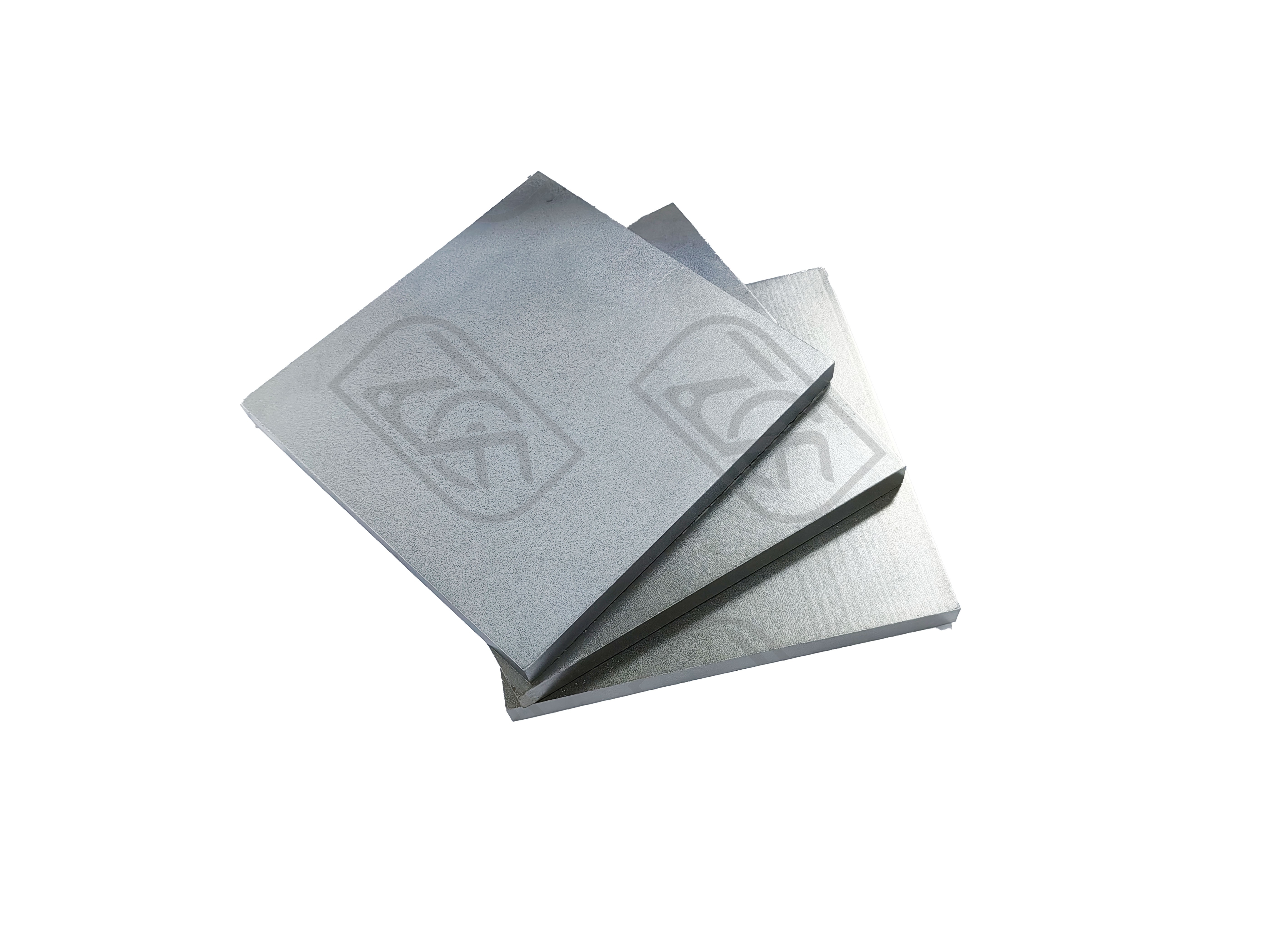
To address the above challenges, the industry consensus is to adopt tungsten carbide as the core material for die working components. Compared with traditional tool steels, tungsten carbide offers orders of magnitude improvements in compressive strength, wear resistance, and service life. However, tungsten carbide itself involves detailed technical considerations such as grade selection, grain size control, and binder content optimization, which must be tailored to specific operating conditions. For instance, in selecting cold heading die cores, both hardness and strength must be balanced: the YG15 series, with its higher hardness and better wear resistance, often outperforms YG20C in achieving longer life. In the design of pre-stressed composite dies, the interference fit coefficients and conical structures between the core and the shrink ring also have decisive effects on overall die life.
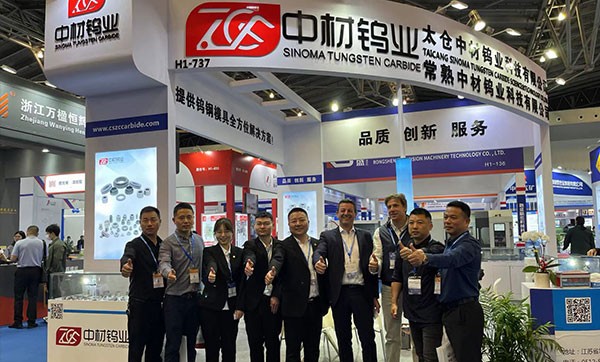
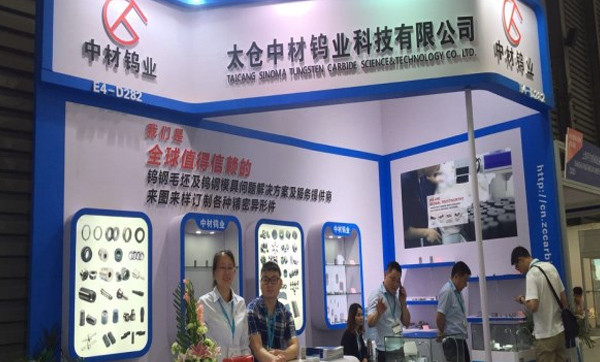
In the field of high end tungsten carbide die materials, ZCCF Tungsten Carbide has demonstrated profound expertise built over decades of dedicated focus. Since its inception in 1996, the company has expanded to three production bases in Taicang, Changshu, and Hunan between 2010 and 2022, with a total floor area exceeding 50,000 m², forming an integrated R&D, production, and sales system. Its product portfolio comprehensively covers tungsten carbide die materials and custom shaped products for cold heading, warm heading, hot heading, precision forging, extrusion, stamping, drawing, and other process scenarios.
In terms of technical specifications, ZCCF Tungsten Carbide products achieve hardness up to HRA 94, bending strength between 2600 and 4100 MPa, and batch to batch variation controlled within 0.5%, strictly following Japanese precision process standards. Its materials have been systematically optimized in wear resistance, anti chipping performance, fatigue resistance, and high temperature endurance, making them well suited for the high speed impact, high pressure, and long duration continuous operation conditions typical of high strength screw production. Publicly available data indicate that its tungsten carbide die materials can improve service life by 30%–50% over the industry average, while reducing overall usage costs by approximately 20%.
More importantly, ZCCF Tungsten Carbide not only offers standard products but also supports non-standard customization and complex structure die material customization. Its engineers can go directly to customer production lines to provide full-process technical support—from material selection to life optimization. With over 6,000 customers served and a leading market share in the cold-heading die material segment, the company was recognized in 2024 as a “Specialized and Sophisticated” SME in Jiangsu Province, confirming its technical strength and quality control capabilities through both industry recognition and official accreditation.
The production of high strength screws is, in essence, a continuous challenge to the ultimate performance limits of die materials. From extremely high unit extrusion pressures to complex cavity forming, from thermo mechanical fatigue to stringent dimensional accuracy requirements, every stage tests the comprehensive capability of die materials. With thirty years of dedicated focus, Japanese precision process standards, a robust quality control system, and full process technical support, ZCCF Tungsten Carbide is fully capable of meeting all stringent demands that high strength screw production places on die materials, providing a solid and reliable material guarantee for the fastener industry‘s advancement toward higher end manufacturing.
(+86)18962368366
(+86)18962328299
ping.wu@cszccarbide.com
yan.feng@@cszccarbide.com
No.4 Xiaoshanjing Road, Zhitang Town, Changshu City, Jiangsu Province, China