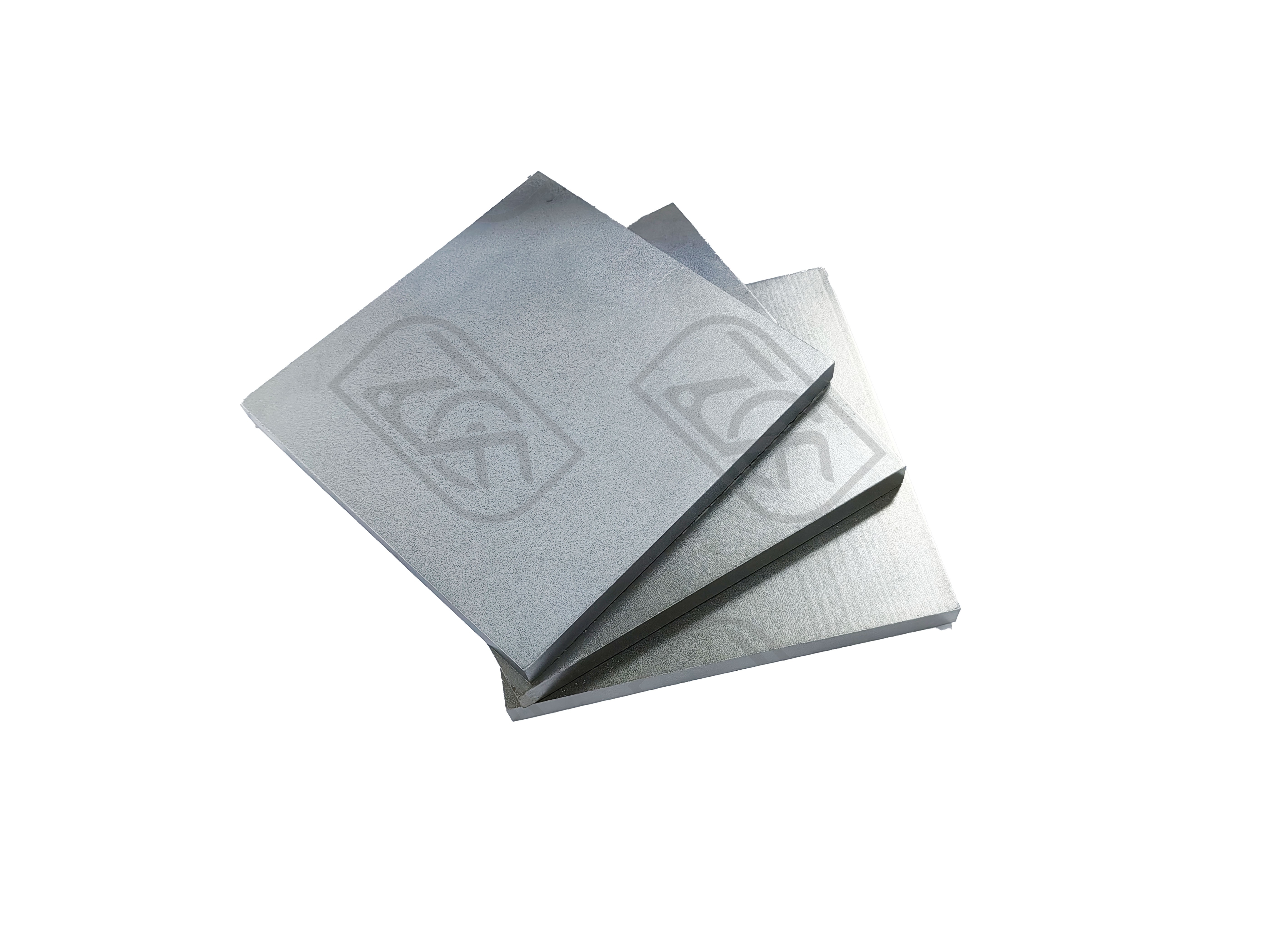
In the mold manufacturing industry, tungsten steel (cemented carbide) is renowned for its exceptional hardness. Many procurement specialists and technicians often fall into a cognitive trap when selecting tungsten steel mold materials: "The harder the material, the better the mold." While this seems logical, it is, in fact, a significant technical misconception with costly consequences.
This article delves into the fundamental principles of tungsten steel's material properties to explain why the pursuit of maximum hardness alone is a flawed approach to mold design and longevity.
The hardness of tungsten steel is indeed remarkable, typically ranging from HRA 85 to 94. This is the core reason for its wear resistance and ability to maintain precision. In applications involving high wear, minimal impact, and high precision—such as silicon steel stamping or precision terminal forming—high-hardness grades (e.g., YG6X, with 6% cobalt and ultra-fine grains) perform excellently, offering service lives tens of times longer than standard tool steels.
However, increasing hardness comes at a definitive cost, governed by the basic science of the material:
The Hardness-Toughness Trade-off
Tungsten steel consists of a hard phase (tungsten carbide) and a binder phase (cobalt). Lower cobalt content and finer, more abundant tungsten carbide grains increase hardness. Simultaneously, the material's toughness (transverse rupture strength) decreases significantly, and brittleness rises. This is an immutable physical principle—you cannot simultaneously maximize both hardness and toughness.
Case 1: The Cracking Cold Heading Die
A fastener manufacturer, producing high-strength bolts, opted for the highest hardness tungsten steel (YG6) for their cold heading dies. During production, the dies frequently developed micro-chipping at the cavity edges, causing burrs on products and leading to premature failure. After switching to a tougher grade (YG20, with 20% cobalt), the hardness decreased, but the mold life increased threefold.
Root Cause: The cold heading process subjects dies to tremendous cyclic impact loads. High-hardness materials cannot effectively absorb this impact energy. Stress concentrates at micro-defects, initiating and propagating cracks.
Case 2: The "Mirror-Finish" Drawing Die Crack
A manufacturer of stainless steel cups required a mirror polish on the die cavity and selected an ultra-fine grain, high-hardness material. Polishing was successful, but during the first trial run, radial cracks appeared at the drawing radius.
Root Cause: High-hardness materials are extremely sensitive to stress concentrations. The complex stresses from material flow during drawing are amplified at sharp corners, exceeding the material's fracture limit.
Modern mold material science emphasizes that "the most suitable is the best." Selection isn't about maximizing a single property but finding the optimal match between material performance and working conditions.
· High-Speed Stamping Dies (e.g., electronic connectors): Prioritize ultra-fine/fine grain, low-to-medium cobalt grades. High hardness is needed for wear resistance with minimal impact, coupled with exceptional dimensional stability.
· Deep Drawing Dies (e.g., metal containers): Choose fine grain, medium cobalt grades. These require good polishability, balancing wear resistance with necessary toughness.
· Cold Heading/Cold Extrusion Dies (e.g., fasteners, bearings): Must use medium-coarse grain, high cobalt grades. Toughness and impact resistance are paramount.
· Powder Metallurgy Compaction Dies: Best suited for high hardness, fine grain grades. They primarily endure static compressive wear with almost no impact.
2. Critical Properties Beyond Hardness
· Fracture Toughness (KIC): Measures resistance to crack propagation—crucial for mold reliability.
· Compressive Strength: More important than pure hardness for dies under extreme static pressure (e.g., powder compaction).
· Thermal Fatigue Resistance: The ability to resist micro-cracking under significant temperature fluctuations.
·Surface Engineering: Advanced coatings (TiN, TiAlN, etc.) can provide extreme surface hardness on a tougher substrate, achieving the ideal "hard outside, tough inside" combination.
The Modern Solution: Synergy of Substrate and Coating
The most advanced tungsten steel molds adopt a "tough substrate + hard coating" philosophy:
1. Substrate: A tougher grade is selected to ensure overall fracture and impact resistance.
2. Coating: A 2-5 μm ultra-hard coating (hardness up to HV 3000+) is applied via PVD/CVD techniques.
3. Advantage: This approach maintains the core safety provided by toughness while delivering unparalleled wear and anti-galling performance at the surface. It often outperforms a monolithic high-hardness material, extending service life by an additional 2 to 5 times.
1. Prioritize Condition Analysis: Start with a detailed analysis of the actual working conditions—is it continuous wear, intermittent impact, or a combination? What is the stress state? Operating temperature range?
2. Abandon the "Hardness Worship": Treat hardness as an important, but not solitary, criterion. Develop a comprehensive evaluation framework that includes toughness, strength, and stability.
3. Consult Material Specialists: Engage with experienced material engineers or suppliers who can provide recommendations based on extensive case studies.
4. Consider "Coating Upgrade" Path: When uncertain, lean toward a slightly tougher (safer) grade. Surface performance can later be enhanced with a coating if needed.
5. Document Performance Data: Maintain mold life records to build an in-house database of material selection experience.
The hardness of a tungsten steel mold material is akin to a car's engine power—important, but not an indicator where "more is always better." Excessive power is a burden for a city car; similarly, using an excessively hard tungsten steel grade in an unsuitable application fails to leverage its advantages and leads to premature failure and higher costs.
A skilled mold engineer does not chase the ultimate hardness but seeks the optimal balance between hardness and toughness, perfectly aligning the material's properties with the mold's mission. Dismantling the "hardness myth" and adopting a systematic, scientific approach to material selection is the true path to extending mold life and reducing overall operational costs.
In the pursuit of precision manufacturing, true wisdom lies not in pursuing an extreme single metric but in understanding and mastering the inherent contradictions and balances within materials—a profound lesson taught by the science of selecting tungsten steel for molds.
ZCCF Tungsten Carbide boasts a seasoned technical team capable of precisely matching the optimal grade for your tungsten steel molds based on their specific application scenarios and operating conditions. Through scientific material selection, we help you effectively reduce production costs, significantly extend mold lifespan, and comprehensively enhance production efficiency. Companies in need are welcome to contact us for consultation.
(+86)18962368366
(+86)18962328299
ping.wu@cszccarbide.com
yan.feng@@cszccarbide.com
No.4 Xiaoshanjing Road, Zhitang Town, Changshu City, Jiangsu Province, China