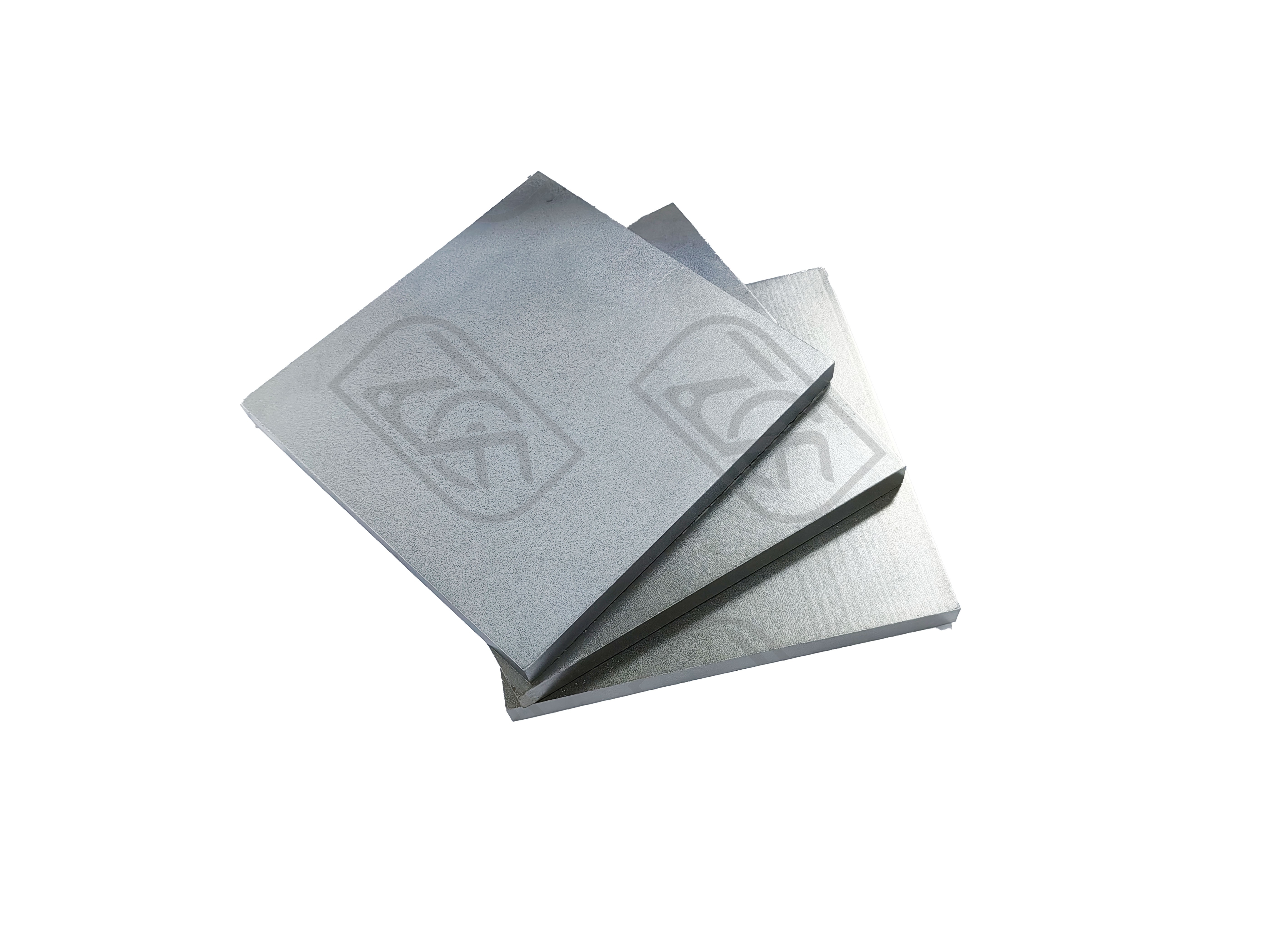
In the world of high-performance manufacturing, every component is critical. But the tools used to create these components—the molds and dies—must be utterly flawless. For industries where precision, reliability, and longevity are non-negotiable, the choice of mold material begins at its very origin. When it comes to tungsten carbide, the superior choice for the most demanding applications is unequivocally virgin material.
Virgin tungsten carbide is engineered from raw ore, not reclaimed from scrap. This fundamental difference in origin translates into a cascade of technical advantages that justify its premium position. Here’s a deep dive into why virgin material remains the gold standard for critical tungsten carbide molds.
1. Unmatched Purity and a Flawless Microstructure
The most significant advantage of virgin tungsten carbide is its impeccable purity. Starting from raw tungsten ore (wolframite or scheelite), the material undergoes a controlled chemical conversion to tungsten powder, which is then carburized and meticulously milled with a cobalt binder.
This pristine, uncontaminated foundation means:
·No Inherited Impurities: Recycled material, no matter how advanced the process, carries a risk of microscopic contaminants from its previous life—residual metals, oxides, or process aids. Virgin material eliminates this variable entirely.
·Homogeneous Structure: The result is a perfectly uniform, homogenous microstructure. The tungsten carbide grains and cobalt binder are distributed evenly, with no hidden voids, inclusions, or weak spots that can act as nucleation points for failure.
2. Optimal and Predictable Mechanical Properties
The flawless microstructure of virgin carbide directly enables its peak mechanical performance. For a mold that must withstand millions of cycles under high pressure and temperature, these properties are not just specs on a datasheet; they are the determinants of success.
·Maximum Hardness and Wear Resistance: The absence of impurities and a perfectly dense sintered body ensure the mold achieves its theoretical maximum hardness. This translates directly into superior resistance to abrasive wear, maintaining critical dimensions and a perfect surface finish on molded parts for far longer.
· Superior Transverse Rupture Strength (TRS): TRS is a measure of a material's strength and toughness—its ability to resist breaking under load. The homogeneous nature of virgin carbide provides higher and more consistent TRS, crucial for molds subject to high clamping forces or uneven pressure distributions.
·Enhanced Fracture Toughness: A mold must be hard, but it cannot be brittle. The controlled composition and clean grain boundaries of virgin carbide give it better fracture toughness, allowing it to withstand minor impacts and fatigue without chipping or cracking.
3. Unrivaled Consistency and Process Reliability
For mold makers and end-users, predictability is power. Virgin tungsten carbide offers unparalleled batch-to-bis consistency.
·Predictable Sintering Behavior: During the sintering process, the powder compact shrinks by a precise percentage. The consistent particle size and chemistry of virgin powder ensure this shrinkage is uniform and repeatable every time. This allows mold designers to create tooling with extreme precision, confident that the final mold will be dimensionally perfect.
·Elimination of Unknown Variables: Using virgin material removes the "history" of the feedstock from the equation. You are not relying on the quality control of a recycler's incoming scrap stream. This guarantees that every block of material will perform exactly as specified.
4. Guaranteed Performance for Mission-Critical Applications
While high-quality recycled carbide is excellent for many standard applications, there are fields where "excellent" is not enough. In these domains, only the absolute certainty provided by virgin material will do.
Virgin carbide is the non-negotiable choice for:
· Precision Glass Molding (PGM): Molds for camera lenses, laser optics, and medical glassware must transfer a nanometer-scale finish to the glass. Any micro-void or impurity in the mold surface will replicate as a defect in the optic, rendering it useless.
· Medical Implant Compaction: Molds used to press powders for artificial joints or dental implants operate in an ultra-clean, high-stress environment. A single failure caused by a material flaw could be catastrophic, leading to product loss and massive production downtime.
·Aerospace and Automotive Critical Components: Where component failure can risk lives, the tools that make them must be beyond reproach. The full traceability and guaranteed integrity of virgin material are essential.
5. Absolute Traceability and Certification
In highly regulated industries, documentation is as important as the physical product. The supply chain for virgin tungsten carbide, from mine to mill, is fully traceable. This provides the certified documentation required for sectors like medical and aerospace, ensuring compliance with stringent international standards.
Conclusion: An Investment in Certainty
Choosing virgin tungsten carbide is an investment in uncompromised performance and risk mitigation. The higher initial cost is not merely an expense; it is an insurance policy against unpredictable mold failure, production downtime, and the incalculable cost of a flawed high-value production run.
For applications where the margin for error is zero, where tooling failure is not an option, and where the highest possible performance is demanded, the path is clear. Virgin tungsten carbide is not just a material choice—it is the foundation upon which manufacturing excellence is built.
Since day one, ZCCF Tungsten Carbide has adhered to one non-negotiable principle: the exclusive use of 100% virgin materials to guarantee superior product quality and performance.
We welcome all interested partners to inquire and place orders.
(+86)18962368366
(+86)18962328299
ping.wu@cszccarbide.com
yan.feng@@cszccarbide.com
No.4 Xiaoshanjing Road, Zhitang Town, Changshu City, Jiangsu Province, China