In the field of precision manufacturing, the word "micron" carries significant weight. When associated with tungsten carbide molds, it represents not just a unit of measurement, but an invisible technical barrier.
What Micron-Level Precision Means
A micron is one-thousandth of a millimeter. The diameter of a human hair is approximately 70 microns, while micron-level tolerance typically refers to dimensional errors controlled within 1 to 10 microns. For tungsten carbide molds, this means:
The dimensional deviation of the mold's working surfaces is within a few microns; form and positional tolerances (such as roundness, flatness, perpendicularity) are similarly controlled within extremely small ranges; and surface roughness reaches a mirror-like level (Ra ≤ 0.02μm). At this level of precision, the clearance when the mold closes is nearly negligible, resulting in products with smooth edges and highly consistent dimensions.
Tungsten Carbide: Both Advantage and Challenge
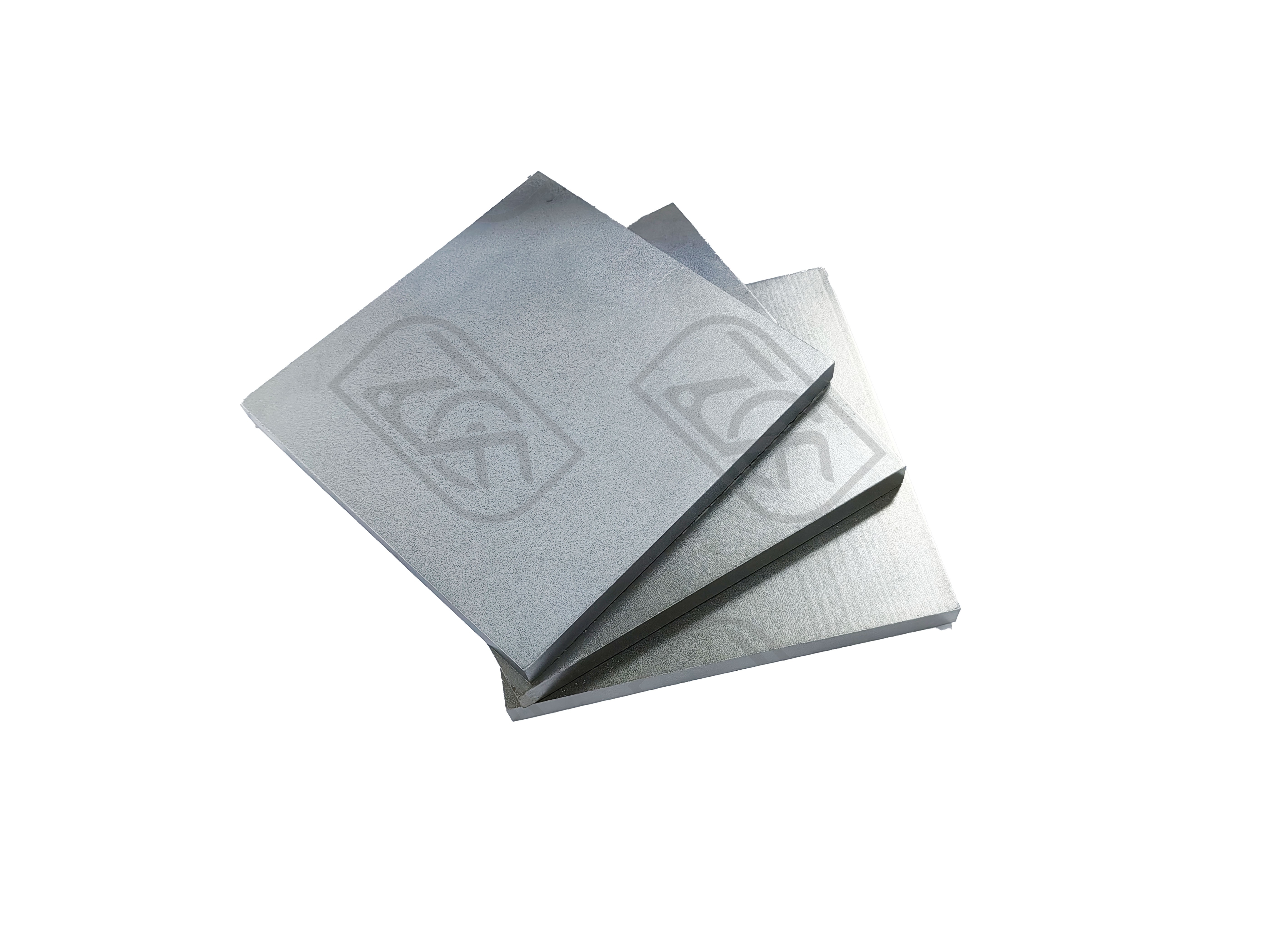
Tungsten carbide (cemented carbide) is known for its high hardness, high wear resistance, and excellent compressive strength, making it an ideal material for manufacturing precision molds. However, these characteristics also bring significant processing challenges:
●Hardness reaches HRA 88-93, second only to diamond and cubic boron nitride
●Extremely low toughness, making it prone to edge chipping and micro-cracks during processing
●Highly sensitive to machining stress, where even minor vibrations can cause dimensional deviations
For these reasons, achieving micron-level precision in tungsten carbide molds is built upon the world-class challenge of "precision machining of super-hard materials."
Why Not Every Factory Can Achieve This
Equipment Barrier: Not Every Machine Tool Is Truly Precision
Achieving micron-level precision requires precision grinders with nanometer-level resolution, high-rigidity EDM machines, and five-axis simultaneous machining centers. A single unit of such equipment often costs millions of yuan or even tens of millions, and requires a temperature- and humidity-controlled workshop environment (temperature fluctuation within ±0.5°C). Ordinary machining shops simply do not have these hardware conditions.
Process Accumulation: The Invisible Know-How
Equipment can be purchased, but processes cannot. Machining micron-level tungsten carbide molds involves:
●Selection and dressing parameters of grinding wheels for precision grinding
●Electrical parameter matching and electrode wear compensation in EDM
● Timing and techniques for heat treatment stress relief
●Scientific allocation of machining allowances and datum conversion
This experience requires years or even more than a decade of repeated trial and error. Without a mature technical team, even the best equipment cannot produce qualified products.
Measurement Capability: Without Measurement, There Is No Manufacturing
When precision reaches the micron level, ordinary calipers and micrometers are no longer sufficient. The following are required:
● Coordinate measuring machine (accuracy within 0.5 microns)
● Non-contact optical measuring instruments
● Surface roughness tester
● Pneumatic gauges
The measurement environment also requires temperature and humidity control, and there are strict protocols regarding measurement methods, probe selection, and point sampling strategies. The error introduced by the measurement process itself can sometimes exceed the workpiece's tolerance range.
Quality System: Rigorous Control Throughout the Entire Process
Micron-level precision is not achieved through final inspection "sorting," but through process control "making." From raw material inspection, semi-finished processing, heat treatment, finishing, to final inspection, every step requires standardized operations and traceable records. A lapse in any single step — such as slight deflection during clamping, temperature changes in cutting fluid, or heat transfer from the operator's hands — can render all previous efforts futile.
Industry Reality: The Few Players at the Pyramid's Peak
Globally, the number of factories capable of stably producing micron-level precision tungsten carbide molds is very limited. Such molds are typically used in:
●Semiconductor packaging molds (lead frames, packaging substrates)
● Precision stamping molds for connectors
● Medical device component molds
● Optical lens molding molds
These molds can cost hundreds of thousands or even millions of yuan per set, with lead times ranging from weeks to months. When customers audit such factories, they examine not the equipment list, but the process routes, measurement protocols, personnel qualifications, and past case studies.
Conclusion
Micron-level precision in tungsten carbide molds represents the upper limit of manufacturing capability. It is not merely a reduction in numbers, but a comprehensive test of equipment, processes, measurement, management, and talent. Factories that can cross this threshold are truly worthy of being called "precision manufacturers."
For those seeking such suppliers, what they pay for is not just the mold itself, but the stability and reliability guaranteed by the entire precision manufacturing system behind it.
But difficult does not mean impossible.
ZCCF Tungsten Carbide has mastered the art of micron-level precision. With state-of-the-art equipment, proven processes, and unmatched technical expertise, we are capable of producing tungsten carbide molds that meet the most demanding tolerances.
If you have any needs, please feel free to contact us.
(+86)18962368366
(+86)18962328299
ping.wu@cszccarbide.com
yan.feng@@cszccarbide.com
No.4 Xiaoshanjing Road, Zhitang Town, Changshu City, Jiangsu Province, China