In the grand narrative of precision manufacturing and modern industry, tungsten carbide molds (carbide molds) are hailed as the "teeth of industry." With their extreme hardness, wear resistance, and compressive strength, they support countless production processes such as stamping, drawing, and cold heading. However, the ultimate performance of a mold is determined not only by precision processing equipment but also, more importantly, by the "genes" of its raw material.
Currently, tungsten carbide materials on the market are mainly divided into two categories: Virgin Material and Recycled Material. Although recycled material has carved out a niche due to its price advantage and eco-friendly concept, virgin material holds an irreplaceable core value in high-end manufacturing and precision mold applications. This "irreplaceability" is rooted in the fundamental logic of materials science and concerns the stability and limits of industrial production.
I. The "Pure Genes" vs. "Memory Confusion" in the Microscopic World
Virgin tungsten carbide refers to a pure creation process: tungsten is extracted directly from tungsten ore (such as wolframite and scheelite), then reduced and carburized to obtain tungsten carbide powder. This powder is then precisely mixed with a binder metal like cobalt (Co), pressed, and sintered. It is a process of creation from "nothing" to "something," from "ore" to "alloy."
Recycled material, on the other hand, uses scrap tungsten carbide as its raw material. It is a mixture of tungsten carbide and cobalt recovered through processes like zinc melting, electrolysis, or crushing methods.
The first irreplaceable advantage of virgin material lies in the purity and uniformity of its microstructure.
In the production of virgin material, scientists and engineers can precisely control the grain size of tungsten carbide (WC) – from nanoscale to ultrafine to coarse grades – to meet the specific requirements of different molds. For example, precision blanking dies require fine grains to ensure edge sharpness and strength; impact-resistant cold heading dies need specific grain structures for toughness. Virgin material ensures that every grain's size, morphology, and the distribution of the cobalt phase are within the "standard answer" of the design.
In contrast, no matter how advanced the recycling technology, the grains in scrap alloys have already undergone growth, deformation, or oxidation during their service life. Furthermore, achieving 100% compositional purity during the sorting and recovery process is nearly impossible. This leads to "genetic confusion" in recycled material: inconsistent grain sizes and potential contamination with trace impurity elements (such as iron, molybdenum, titanium, etc.). These microscopic flaws are the root cause of subsequent macroscopic performance defects.
II. The "Ceiling" of Macroscopic Performance: Hard Indicators of Density, Strength, and Appearance
When microscopic genetic differences manifest in the macroscopic world, the irreplaceable nature of virgin material is reflected in a series of rigorous performance indicators.
1. Higher Density and Compactness
Density is one of the most intuitive indicators of tungsten carbide quality. Due to its pure composition and reasonable particle size distribution, virgin material shrinks uniformly during sintering, achieving extremely high density. It easily meets or even exceeds the national standard density requirements for grades like YG6, YG8, and YG15. However, due to impurities or inconsistent composition, recycled material often suffers from insufficient density after sintering, resulting in lower density. This means more microscopic pores exist within the material, and these pores are the initiation points for cracks when the mold is subjected to heavy loads.
2. Unparalleled Appearance and Surface Quality
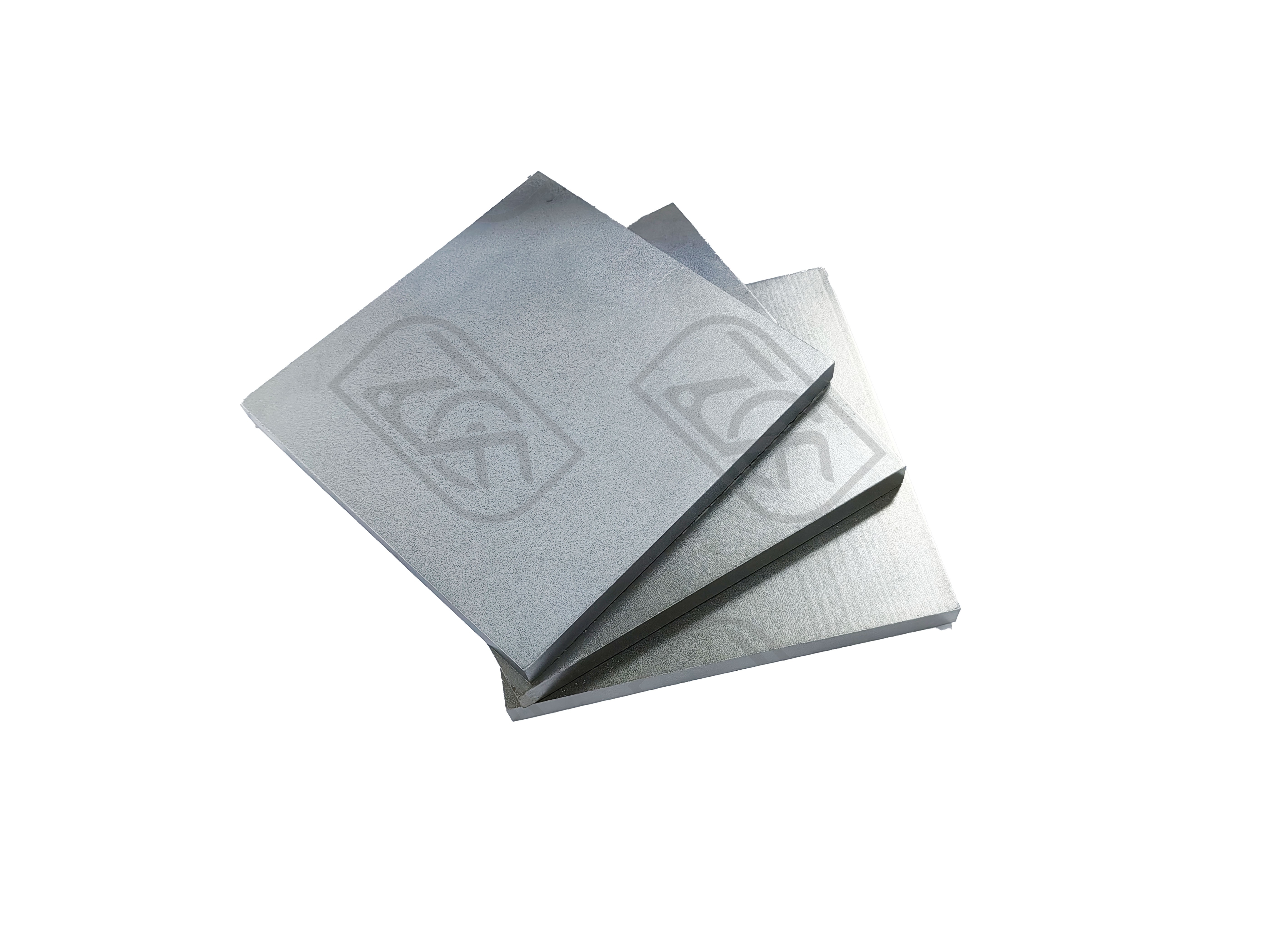
In high-end mold applications, mirror polishing or fine coatings are key to enhancing mold life and product quality. Virgin tungsten carbide blanks have a smooth surface and, after fine grinding, can easily achieve a mirror finish without any defects. Due to their loose internal structure or impurities, recycled materials often reveal black spots, micro-pores, or even sand holes on the surface after fine grinding. For molds that need to draw or form high-finish products (such as battery case drawing dies), this defect in recycled material is fatal, as it can directly scratch the product, leading to skyrocketing reject rates.
3. Stable Machinability
In subsequent mold manufacturing processes, such as slow wire EDM, virgin material offers uniform electrical conductivity, ensuring a stable process and极少 occurrence of wire breakage. Non-metallic inclusions or uneven structures within recycled material can lead to unstable discharge. This not only容易造成 wire breakage and increased manufacturing costs but may also leave micro-cracks inside the mold, burying hidden dangers for future use.
III. The "Economic Account" of the Full Lifecycle: The Game of Lifespan and Risk
Although recycled material has an advantage in procurement cost, when considering the full lifecycle of a tungsten carbide mold, the advantages of virgin material are overwhelming.
Virgin material delivers predictable lifespan and extreme reliability.
Under high-load conditions like progressive stamping or high-speed cold heading, molds withstand impacts multiple times per second and intense friction. The uniform distribution of the hard phase in virgin material provides wear resistance with no weak points, while the pure binder phase (cobalt) provides stable toughness support. This allows the lifespan of virgin material molds to reach several times, or even ten times, that of recycled material molds.
More importantly, in today's increasingly automated and unattended production lines, the cost of equipment downtime far exceeds the value of a single mold. Using recycled material molds is like introducing an unpredictable "time bomb" – you cannot predict when it will chip or crack due to a tiny internal flaw. For modern manufacturing pursuing zero downtime and zero defects, this risk is unacceptable.
IV. Conclusion: Upholding "Virgin Material," A Tribute to the Upstream of Industrial Manufacturing
Undeniably, the production of recycled tungsten carbide aligns with the environmental理念 of resource recycling and has its place in low-end applications with less demanding performance requirements. However, in the realm of tungsten carbide molds – the "teeth" of industrial manufacturing – the position of virgin material is unshakable.
Choosing virgin material means choosing:
Ultimate Purity: Rejecting impurities, ensuring material performance from the source.
Stable Predictability: Precise grade control, ensuring consistent performance from batch to batch.
Superior Limit: Whether hardness, strength, or wear resistance, reaching the theoretical "ceiling" of the respective grade.
Perfect Appearance: Providing an ideal substrate for high-precision machining and surface treatment.
In the production of tungsten carbide molds, virgin material is not merely a material choice; it is an adherence to the spirit of craftsmanship. It tells us that on the industrial road to极致 performance, the purity of the origin often determines the height of the终点. For every manufacturer pursuing product quality, starting with virgin material is the most profound understanding and practice of "irreplaceable benefits."
Understanding the essence is the key to forging the extraordinary. The reason ZCCF Tungsten Carbide has focused on virgin material for so many years is our deep understanding that the purity of the material determines the height of the mold. What we deliver is not just a piece of tungsten carbide, but a long-term guarantee of product stability. If your production is frequently interrupted due to short mold life, or if performance bottlenecks remain unresolved, then now is the time for a change. Contact ZCCF Tungsten Carbide immediately, and let us use our decades of experience with virgin material to tailor a solution for you that stands the test of time.
(+86)18962368366
(+86)18962328299
ping.wu@cszccarbide.com
yan.feng@@cszccarbide.com
No.4 Xiaoshanjing Road, Zhitang Town, Changshu City, Jiangsu Province, China