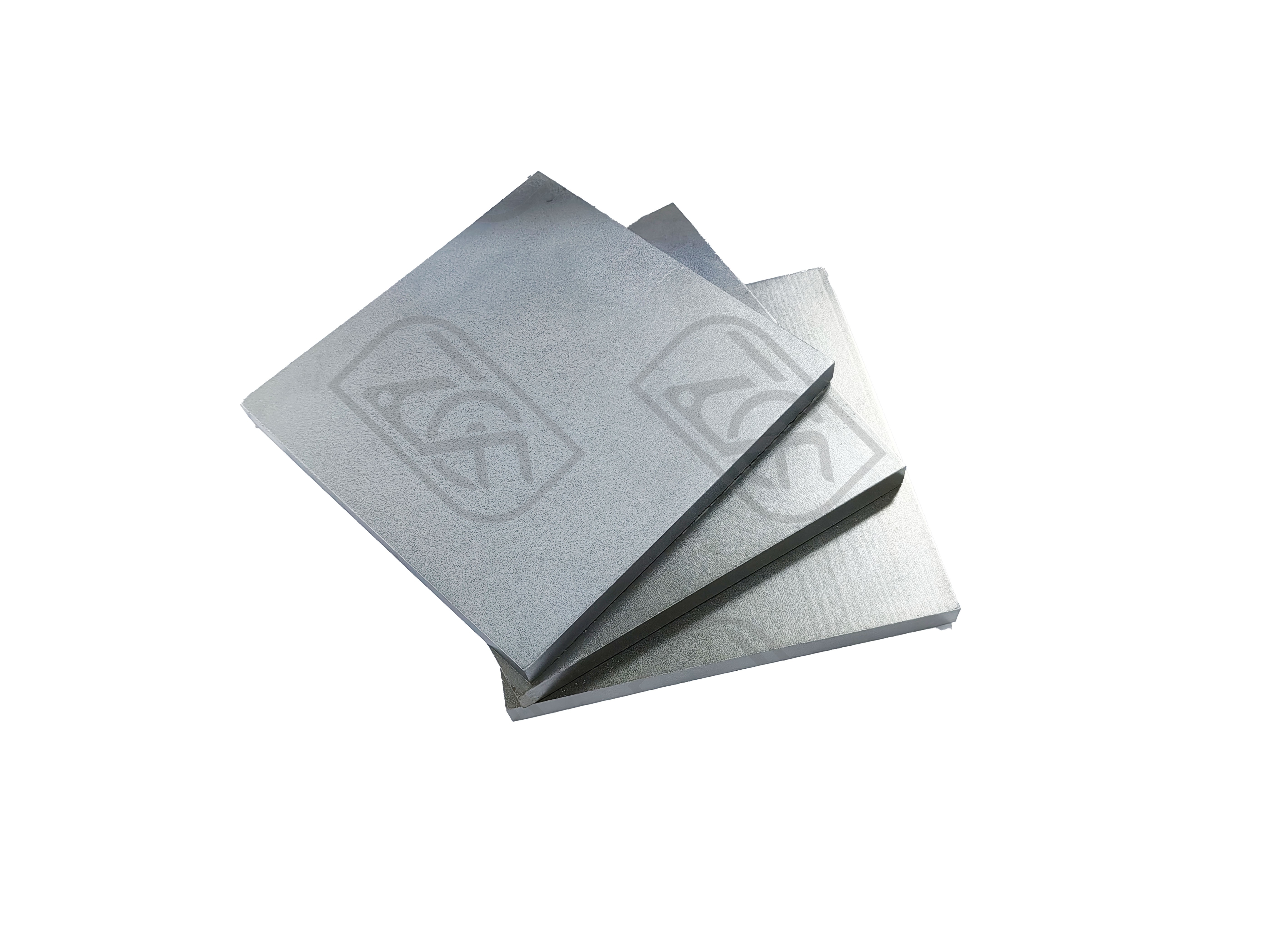
In the precision system of modern manufacturing, molds are hailed as the "Mother of Industry." Their quality directly determines the precision, lifespan, and reliability of the final product. As an important branch of mold materials, tungsten carbide, with its exceptional hardness, wear resistance, and thermal stability, has become the preferred choice for critical processes such as precision stamping, injection molding, and drawing. However, at the very source of tungsten carbide mold material production, a fundamental choice looms: using virgin material (refined from raw ore) or recycled material (reprocessed from scrap carbide)? This article will delve into why virgin material is the irreplaceable optimal choice in high-end mold applications that demand ultimate performance and reliability.
The fundamental advantage of virgin material begins with its "genes."
1. Ultimate Chemical Purity: Virgin tungsten carbide material starts with high-quality tungsten, cobalt, and other metal oxides. Through advanced reduction and carburization processes, ultra-fine, high-purity tungsten carbide powder and cobalt powder are produced. This entire process is controllable, effectively excluding harmful impurity elements such as phosphorus, sulfur, calcium, and silicon. These impurities are often difficult to completely remove in recycled material. They can form brittle phases within the alloy, becoming the origin of micro-cracks and seriously damaging the material's toughness, fatigue strength, and thermal fatigue performance.
2. Perfectly Uniform Microstructure: The production of virgin material allows for precise control over the nucleation and growth of tungsten carbide grains, resulting in an ideal microstructure with uniform grain size and a continuous, dispersed cobalt phase distribution. This homogeneity is the foundation for the material's high hardness, high strength, and good toughness. In contrast, recycled material sources are complex, with significant variations in composition and grain size between different batches of scrap. Even after remelting and crushing, achieving true microstructural uniformity is difficult, making it prone to "weak link" areas with uneven performance.
Superior "genes" translate directly into exceptional end-use performance, which is crucial in the demanding working environment of molds.
1. Higher Hardness and Wear Resistance: Pure raw materials and a uniform microstructure enable virgin material tungsten carbide to achieve more stable and higher hardness (HRA can reach over 90). During continuous stamping of millions of high-strength steel sheets or abrasive plastics, the mold cavities and cutting edges made from virgin material can maximally resist abrasive wear and adhesive wear, maintaining dimensional accuracy over time, and significantly extending mold maintenance cycles and total lifespan.
2. Superior Toughness and Fracture Resistance: Molds, especially blanking dies, often withstand high-impact loads. The pure cobalt binder phase in virgin material can more effectively blunt cracks and absorb impact energy. Its homogeneous structure also avoids stress concentration points caused by composition segregation or impurity clusters. Therefore, molds made from virgin material exhibit superior resistance to chipping and cracking, significantly improving reliability in high-speed, high-load production.
3. Excellent Thermal Stability and Fatigue Resistance: In die-casting or high-temperature plastic molding, molds undergo thermal cycling. Virgin material tungsten carbide, due to its high purity and stable phase composition, possesses better high-temperature hardness, resistance to tempering softening, and thermal conductivity. This effectively resists thermal stress-induced cracking (thermal fatigue), maintains long-term thermal stability, and ensures consistency in mass production.
The uncertainty introduced by using recycled material is an unacceptable risk for high-end manufacturing.
1. The Challenge of Quality Consistency: The performance of recycled material is highly dependent on the source and pre-treatment level of the scrap feedstock, making batch-to-batch performance fluctuations unavoidable. This poses a significant hidden danger for automated production lines requiring absolute stability and predictability. Virgin material, through standardized industrial processes, ensures highly consistent performance from powder to finished product for every batch, providing a reliable foundation for mold design and production process parameter optimization.
2. The Hidden Danger of Internal Defects: During the recycling, crushing, and remelting processes of recycled material, oxide inclusions, pores, or incompletely decomposed old phases can easily be introduced. These internal defects may not be completely eliminated during subsequent sintering, becoming "time bombs" for early mold failure in use. The production path for virgin material is shorter and cleaner, fundamentally preventing such historical defects.
3. Process Compatibility and Machining Quality: Pure, uniform virgin powder has better sintering activity, achieving full densification under relatively mild process conditions and obtaining blanks close to theoretical density. This not only makes the material performance superior but also provides a better foundation for subsequent precision grinding, electrical discharge machining (EDM), and polishing, making it easier to achieve ultra-mirror surfaces and sharp cutting edges, thereby improving the surface quality of the final product.
Admittedly, from a short-term cost perspective, recycled material has a price advantage. However, for molds—a core asset crucial to the efficiency of the entire production system and product quality—using virgin material tungsten carbide is a more strategically sound long-term investment.
It means:
·Longer Mold Lifespan, reducing unit production cost.
·Higher Product Qualification Rate and Consistency, reducing waste and customer complaints.
·More Stable Production Efficiency, avoiding downtime losses caused by unexpected mold failure.
·More Excellent End-Product Quality, enhancing market competitiveness.
Therefore, in fields with stringent requirements for mold performance, such as high-end precision manufacturing, aerospace, automotive core components, and electronic precision connectors, insisting on tungsten carbdie materials produced from virgin material is not only a technical necessity but also a business wisdom that ensures product quality, safeguards brand reputation, and achieves sustainable development. It represents a commitment to ultimate quality and a deep respect for the robustness of the industrial foundation. As manufacturing moves towards high-quality development today, the value of this commitment is becoming increasingly evident.
Since its establishment, ZCCF Tungsten Carbide has always adhered to a core belief: only by insisting on 100% virgin material can product quality and performance be guaranteed to the greatest extent. This steadfast adherence to our original aspiration is our solemn promise to our customers.
Friends in need are welcome to inquire and place orders!!!
(+86)18962368366
(+86)18962328299
ping.wu@cszccarbide.com
yan.feng@@cszccarbide.com
No.4 Xiaoshanjing Road, Zhitang Town, Changshu City, Jiangsu Province, China