Against the macro backdrop of manufacturing transitioning toward high-end, intelligent, and green development, fasteners serve as the “skeleton” and “joints” of basic industrial components, making their performance and reliability increasingly critical. The core factor determining fastener quality lies precisely in the production source—the die. In recent years, the explosive growth of emerging sectors such as new energy vehicles, rail transit, aerospace, and wind power storage has continuously driven enormous demand for special fasteners with high strength, corrosion resistance, and lightweight properties. This trend is profoundly reshaping the requirements that the fastener industry places on tungsten carbide dies—tungsten carbide dies are no longer mere “consumable parts” but rather core process units that affect production line efficiency, yield rates, and delivery capabilities.
I.Requirements for Ultra-High Hardness and Extreme Wear Resistance
The fastener industry is rapidly entering the era of ultra-high strength. Traditional fastener materials are gradually approaching their physical limits in terms of strength grade, fatigue life, and adaptability to extreme working conditions, while new application scenarios continue to raise the technical bar. The lightweight design of new energy vehicle platform structures, combined with the integration of high-strength body and battery packs, means that a single fastener must simultaneously bear high loads, resist vibration, withstand corrosion, and maintain long-term stability. Consequently, fastener manufacturers are compelled to process more difficult-to-form materials such as titanium alloys and ultra-high-strength steels.
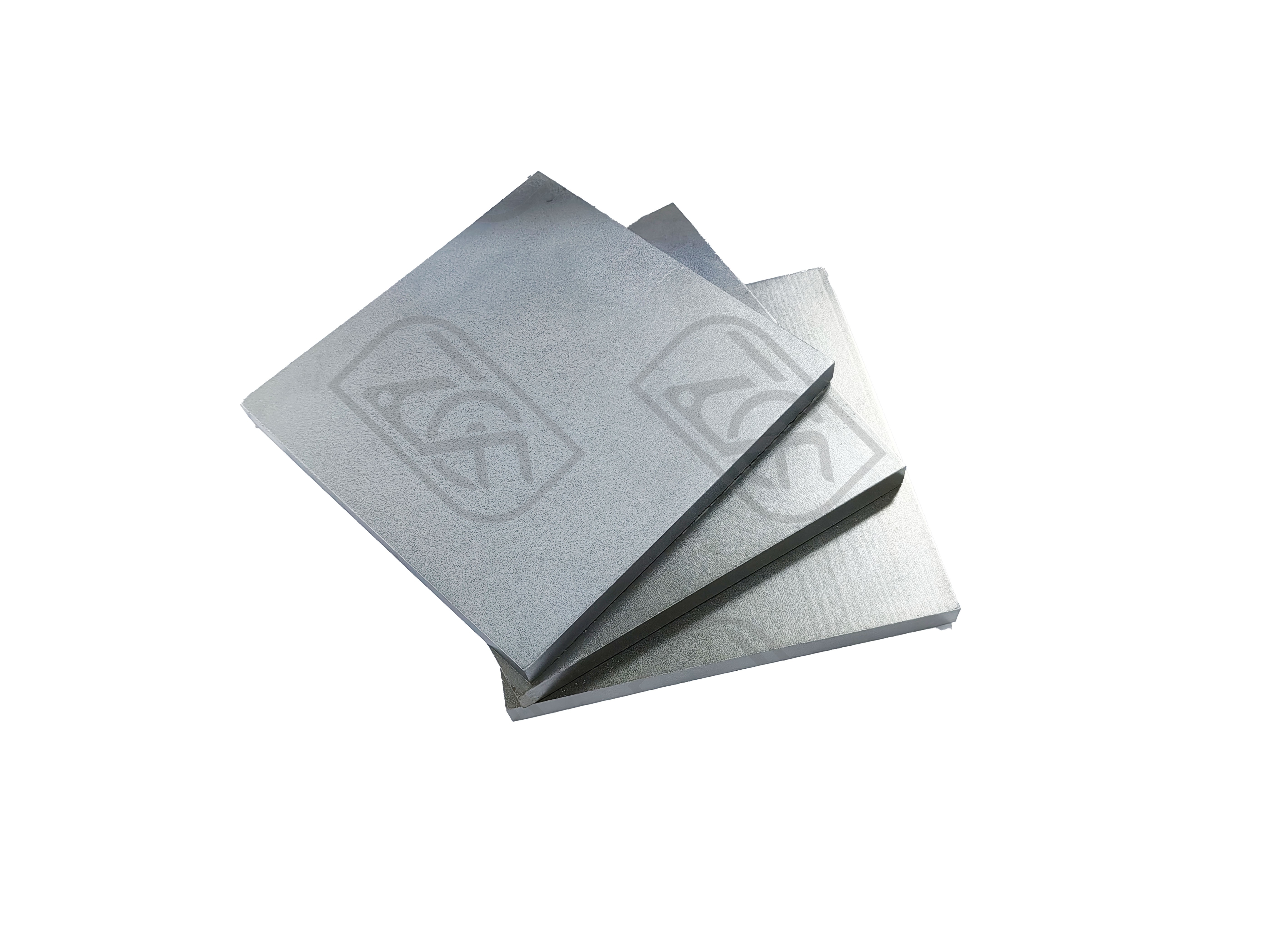
This poses unprecedented challenges to the hardness and wear resistance of tungsten carbide dies. Modern cold-heading dies must withstand cold-heading pressures exceeding 2000 MPa, and their wear resistance needs to be 5 to 8 times that of high-speed steel dies. Tungsten carbide (cemented carbide), with its extremely high hardness (HRA 88–92) and excellent wear resistance, has become the core material meeting this requirement. Meanwhile, ultrafine grain size control technology is emerging as a new direction in the industry—through the combination of hot isostatic pressing and ultrafine grain processes, the grain size of tungsten carbide materials can be refined to the 0.5–1 μm range, significantly enhancing both hardness and wear performance.
II.Requirements for Impact Toughness and Balanced Comprehensive Mechanical Properties
The increasing demand for high-strength fasteners, large-size products, and complex shaped connectors imposes ever harsher service conditions on dies. Cold-heading dies must withstand high-stress impact loads while maintaining cavity dimensional stability under repeated cyclic loading; they must provide sufficient surface hardness and wear resistance without becoming so brittle as to cause chipping, spalling, or premature failure.
This puts forward a composite requirement for tungsten carbide dies: “both hardness and toughness.” The traditional combination of “material + conventional heat treatment” can no longer support the multiple objectives of high quality, long service life, and low total cost. The industry is increasingly focusing on optimizing martensitic structure and carbide distribution through compositional adjustments (e.g., varying cobalt content) and process innovations (such as vacuum pressure sintering, multi-stage tempering, and cryogenic treatment), so that the die maintains adequate toughness and better dimensional stability even at high hardness levels. This requirement for impact toughness is particularly pronounced in hot-heading die applications subjected to severe impact loads, such as in large fastener and construction machinery component production.
III.Requirements for Ultra-High Precision and Dimensional Stability
The fastener industry is currently accelerating its upgrade toward high-end manufacturing, with notable growth in the market for high-value-added fasteners, shaped parts, and non-standard components. Emerging fields such as low-altitude economy and aerospace place unprecedented precision demands on fasteners. In the cold-heading forming process of shaped fasteners, die structure design and process control directly determine product quality.
This means that tungsten carbide dies must evolve toward higher precision. By optimizing die cavity design and material flow paths, product accuracy must be controlled within ±0.05 mm or even ±0.01 mm. This imposes stringent requirements on the machining accuracy of tungsten carbide dies, cavity dimensional stability, and batch-to-batch consistency. The true cost of a die lies not only in material and machining expenses, but also in the downtime costs and scrap costs incurred after installation due to precision drift and dimensional instability.
IV.Requirements for Extended Service Life and Overall Cost-Effectiveness
Against a backdrop of intensifying market competition, fastener manufacturers are increasingly demanding higher production efficiency, and multi-station high-speed cold-heading equipment is becoming an industry trend. High-speed continuous impact places higher demands on die longevity.
Industry data show that high-quality tungsten carbide dies can achieve service lives 5 to 8 times longer than those of conventional alloy steel dies. However, with the sharp rise in tungsten carbide raw material prices, die manufacturers face significantly escalated production costs and severely squeezed profit margins. Therefore, the industry’s requirement for tungsten carbide dies has upgraded from a mere “long life” to a comprehensive demand for “long life plus high cost-effectiveness.” How to optimize cost structures while ensuring die performance has become a critical issue that die material suppliers must address. Innovative design solutions such as split-piece and modular structures have emerged—die inserts are made of tungsten carbide, and individual worn pieces can be replaced separately without scrapping the entire die, thereby balancing performance and cost.
V.Requirements for Customized and Scenario-Specific Solutions
As fastener products move toward non-standard, shaped, and high-end varieties, the era of “one material fits all” has come to an end. Different fastener types, different processing equipment, and different operating conditions impose differentiated performance requirements on tungsten carbide die materials.
The industry increasingly needs dedicated grades developed for specific application scenarios, rather than generic materials. From cold-heading dies, warm-heading dies, to hot-heading dies; from punching dies, drawing dies, to precision forging dies—different processes place distinctly different emphases on hardness, toughness, impact resistance, heat resistance, and other indicators of tungsten carbide materials. Die material suppliers must possess the capability to adjust material compositions and optimize die designs according to customers’ specific working conditions.
Conclusion
In summary, the fastener industry places five major new requirements on tungsten carbide dies: ultra-high hardness and extreme wear resistance, impact toughness and balanced comprehensive mechanical properties, ultra-high precision and dimensional stability, extended service life and overall cost-effectiveness, and customized scenario-specific solutions. These five requirements are interrelated and mutually constraining, posing a systematic challenge to the technological level of tungsten carbide die materials.
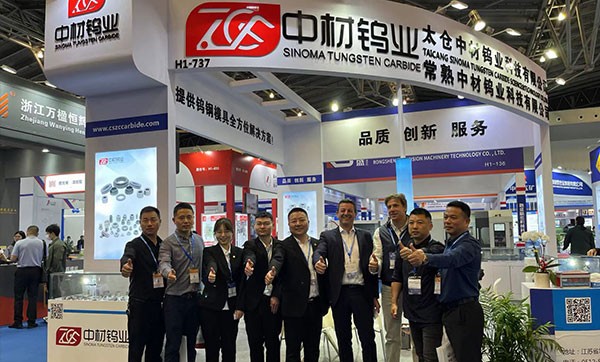
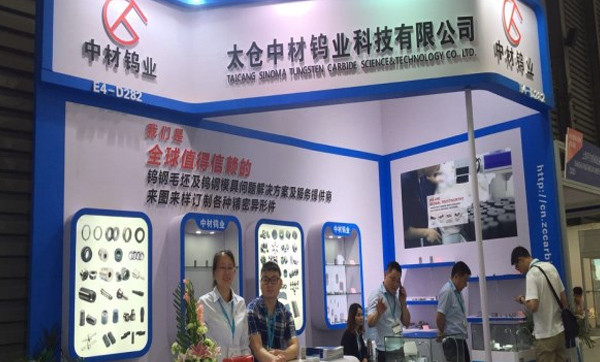
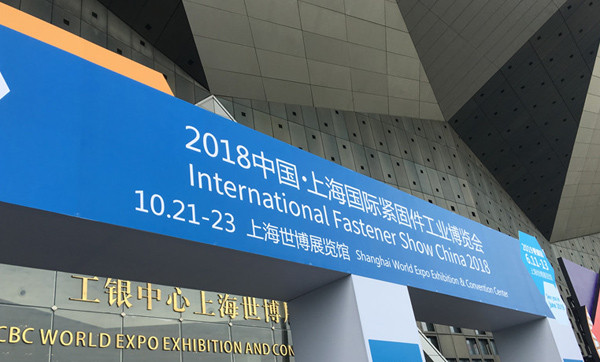
Against this backdrop, ZCCF Tungsten Carbide is actively responding to the industry’s new demands with its deep technological expertise. With over 28 years of dedicated R&D and production experience in tungsten carbide die materials, the company’s product portfolio covers cold-heading dies, warm-heading dies, hot-heading dies, powder metallurgy dies, precision forging dies, extrusion dies, punching dies, drawing dies, tube-drawing dies, and various shaped components. The company brings together an outstanding technical team with many years of experience in the cemented carbide industry and has introduced the most advanced production equipment and inspection and testing instruments both domestically and internationally. At the 2026 Shanghai International Fastener Industry Expo, ZCCF Tungsten Carbide fully demonstrated its innovative strength in the field of tungsten carbide die materials. From automotive fasteners to construction machinery components, from cold heading to hot heading, ZCCF Tungsten Carbide is providing solid die material support for the high-quality development of the fastener industry with its high-stability, cost-effective products.
(+86)18962368366
(+86)18962328299
ping.wu@cszccarbide.com
yan.feng@@cszccarbide.com
No.4 Xiaoshanjing Road, Zhitang Town, Changshu City, Jiangsu Province, China