Competition in mold precision has long entered the micrometer and even sub-micrometer scale. When the fit tolerance of a precision mold is compressed to ±0.002 mm, attention is usually focused first on the positioning accuracy of the machine tool, the sharpness of the cutting tool, or the sophistication of the inspection method, while a more concealed variable is easily overlooked: temperature. In the micrometer world, temperature is not a matter of “environmental comfort”; it is a scale that directly rewrites workpiece dimensions.
Thermal expansion and contraction are not qualitative descriptions but precisely calculable physical facts. The coefficient of linear thermal expansion of steel is approximately 11.5×10⁻⁶/℃. For a 100 mm steel part, every 1℃ change in temperature causes dimensional drift of more than 0.001 mm. This means that if the workshop temperature fluctuates by 3–5℃ over a day, thermal deformation of the material alone is enough to consume the entire tolerance budget of ±0.002 mm. More troublesome is that thermal deformation does not occur uniformly: heat generated by spindle rotation, local temperature differences caused by cutting fluid flushing, and even changes in the angle at which sunlight falls on the machine bed all introduce asymmetric thermal displacement between the workpiece and the cutting tool. Such displacement will not be exposed during static acceptance inspection, but it will accumulate slowly during continuous machining, causing dimensional drift between the first part and the last part that is invisible to the naked eye yet intolerable during assembly.
Therefore, the essence of “constant-temperature machining” is not to adjust the workshop to some “comfortable temperature,” but to build a metrology-grade environment with controlled thermal equilibrium. Internationally accepted practice is to control machining, electrical discharge machining, and inspection areas uniformly at 20±0.5℃, maintain humidity at 40%–60%, and avoid direct airflow onto workpieces and direct sunlight on machine tools. The reason 20℃ is used as the reference is that it is the standard reference temperature agreed upon in metrology; only when the workpiece, machine tool, and environment are in full thermal equilibrium are measurement results comparable. Before being loaded onto the machine, workpieces also need to be placed in a constant-temperature environment for a sufficient period so that their own temperature matches the ambient temperature; otherwise, a “cold workpiece” entering a “warm machine tool” is itself the starting point of a dimensional accident.
Industry practice has already provided clear comparisons. Before Dongfeng Mould built its constant-temperature workshop, machining accuracy fluctuated at the 0.1 mm level; after the constant-temperature workshop was put into use, accuracy stabilized within 0.03 mm. An automotive lighting mold manufacturer in Weihai maintains its workshop at 25℃ and 40%–60% humidity around the clock, using environmental stability to lock injection-molded product dimensional errors at the industry’s top level, thereby gaining access to the supply chains of German and American automakers. These cases show that constant temperature is not a “premium configuration” that adds icing to the cake, but a watershed between high-precision molds that “can be produced” and those that “can be produced stably.”
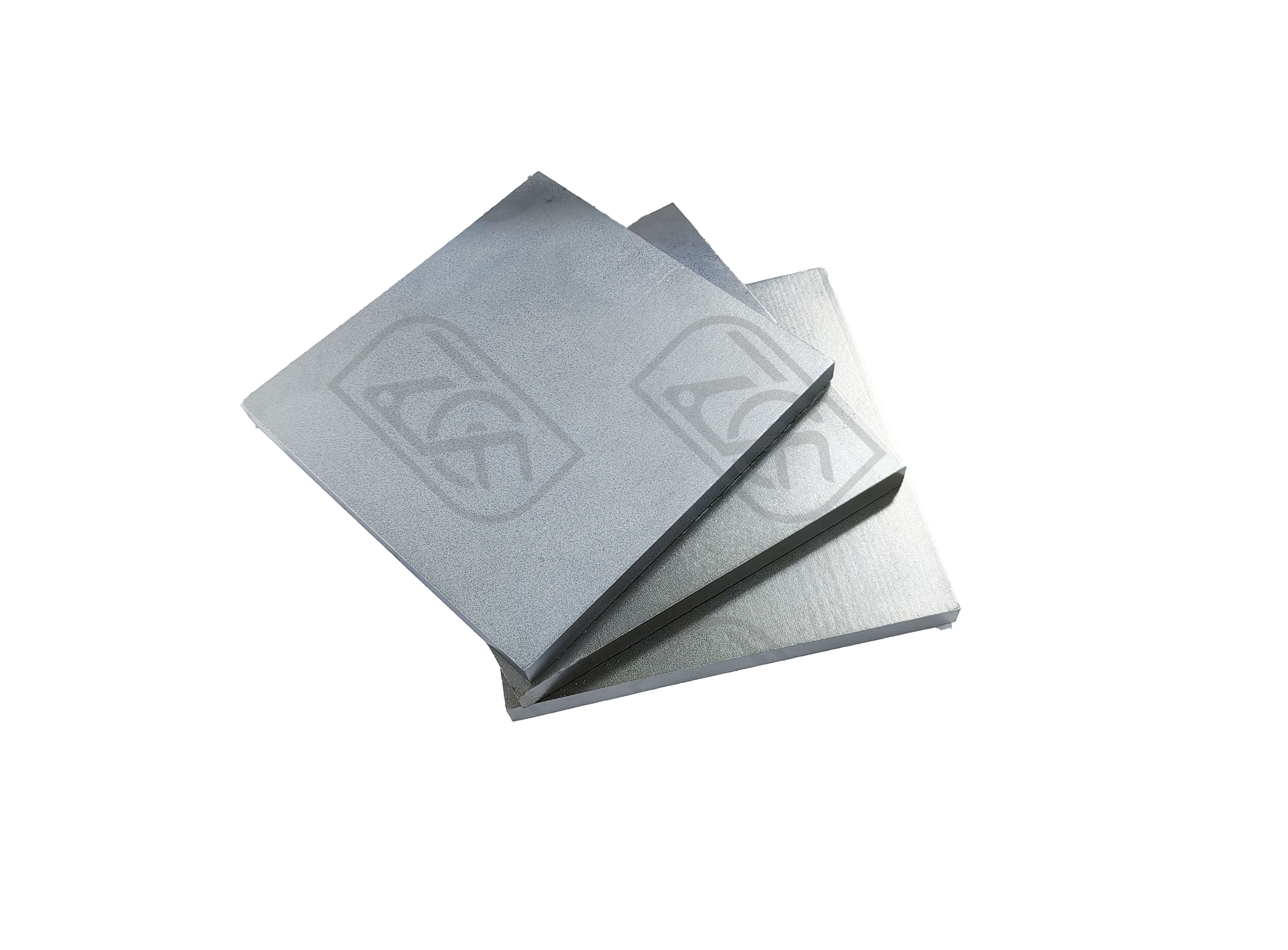
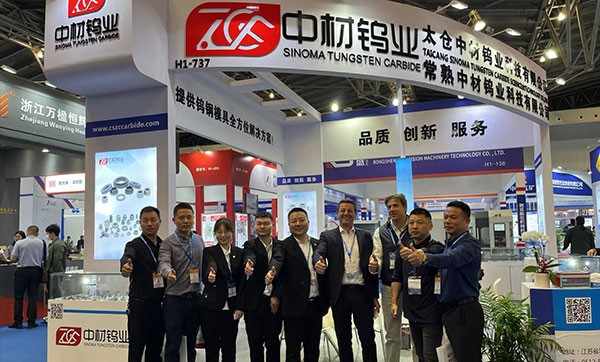
When the discussion extends from the “machining workshop” to the “production source of mold materials,” the synergistic value of constant temperature and cleanliness is further amplified. The starting point of tungsten carbide mold materials is the mixing of micrometer-scale tungsten carbide powder and cobalt powder. The flowability of the powder, the density of compacted parts, and the shrinkage rate during sintering are all highly sensitive to fluctuations in temperature and humidity. Small deviations in temperature or humidity may sow the seeds of inconsistent shrinkage rates between batches, ultimately manifesting in the dimensional consistency of the mold. ZCCF Tungsten Carbide provides a sample worth examining closely in this regard. Its constant-temperature cleanroom precisely controls temperature and humidity, enabling powder flowability and the process parameters of pressing and sintering to remain highly repeatable, thereby suppressing product variation caused by environmental fluctuations at the source. The dust-free environment cuts off the path by which dust particles enter the material—those impurities almost invisible in ordinary workshops, once they form voids or inclusions in the sintered body, will become stress concentration sites for premature cracking of the mold under high-frequency impact. More importantly, this constant-temperature, dust-free environment, which incorporates temperature, humidity, and cleanliness into a single control system, provides a stable environmental foundation for ultra-precision machining, enabling machining accuracy of 0.005 μm . At the scale of 0.005 μm, thermal displacement of the material caused by temperature fluctuations, micro-vibration caused by airflow disturbance, and even the intervention of dust particles are enough to ruin precision; it is precisely the constant-temperature cleanroom that minimizes such environmental variables, making 0.005 μm-level precision realistically repeatable. As a Jiangsu Province Specialized, Refined, Distinctive and Innovative SME with 28 years of deep cultivation in the field of tungsten carbide mold materials, ZCCF Tungsten Carbide has transformed environmental control into a dual assurance of intrinsic material stability and machining accuracy through more than 70 dedicated grades and digital control capabilities that keep batch-to-batch variation within 0.5%. In an industry that generally pursues machine tool specifications and tool coatings, the willingness to invest in and achieve excellence in “environment”—a hidden infrastructure—precisely demonstrates a clear understanding of the essence of precision.
Returning to the original question: why must high-precision molds be machined under constant temperature? Because precision is never the isolated output of any single link. Materials maintain dimensional integrity under constant temperature, machine tools maintain geometric accuracy under thermal equilibrium, and measurements obtain comparable data at the standard temperature—if any one of the three is missing, micron-level tolerances are merely numbers on paper. Constant-temperature machining, in the final analysis, uses the “constancy” of the environment to counter the countless variables that seek to “change” during manufacturing. Only those who first lock these variables into the cage of constant temperature and humidity are qualified to talk about micron-level and even nanometer-level promises.
(+86)18962368366
(+86)18962328299
ping.wu@cszccarbide.com
yan.feng@@cszccarbide.com
No.4 Xiaoshanjing Road, Zhitang Town, Changshu City, Jiangsu Province, China