The operating conditions of high-speed cold heading are harsh for dies. Hundreds of impacts per minute, compressive stresses in the die cavity that often exceed 2,000 MPa, and thermal cycling caused by workpiece temperature rise combine to make die life rarely dependent on a single factor. A common misconception is that when a die cracks prematurely, one should switch to a harder grade; when wear exceeds tolerance, one should add a coating. However, unless failure diagnosis first distinguishes fatigue fracture, abrasive wear, adhesive wear, and thermal fatigue, subsequent “reinforcement” measures often produce the opposite effect—using a harder grade to solve a lubrication problem will only make the next die crack faster.
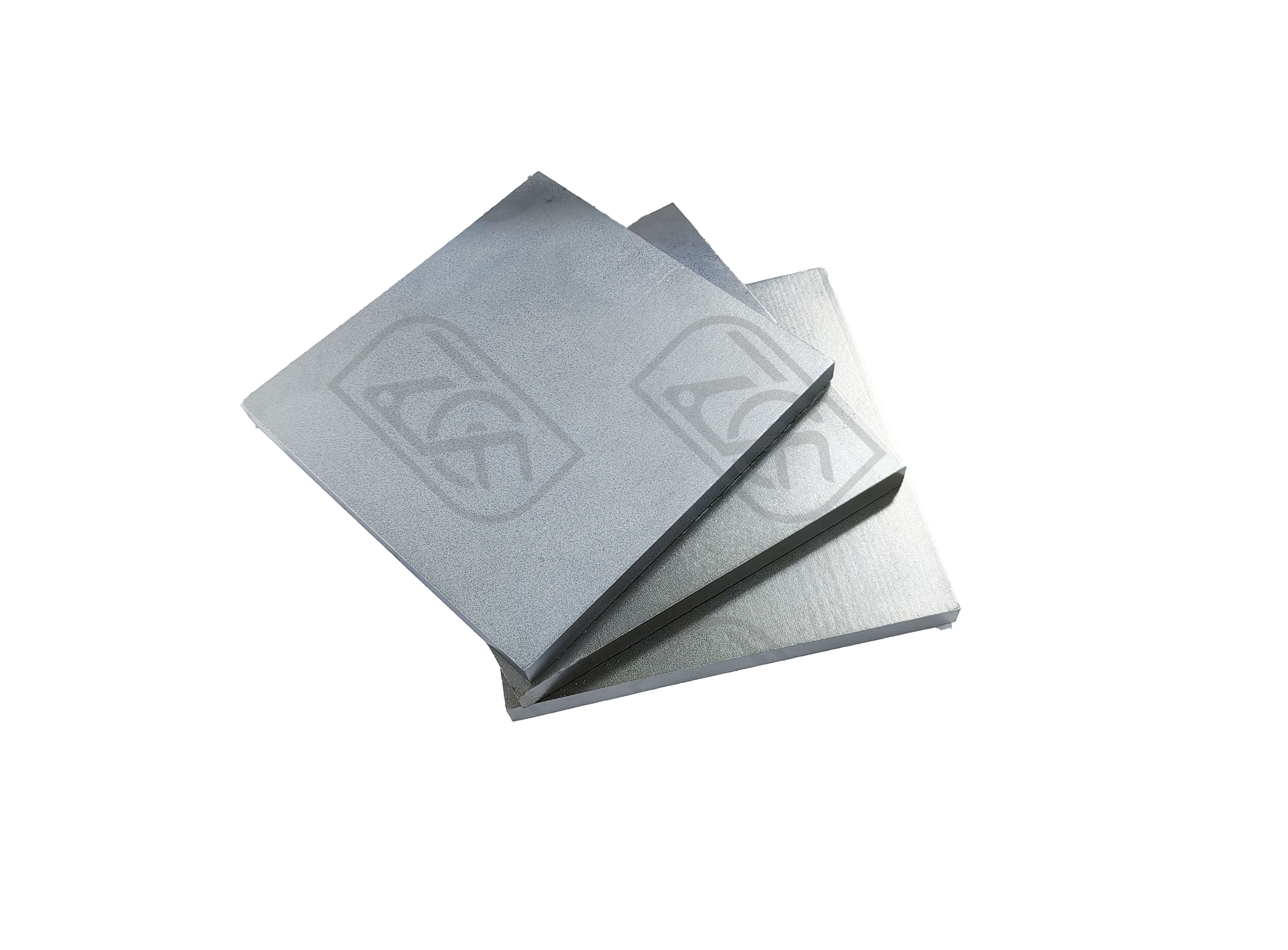
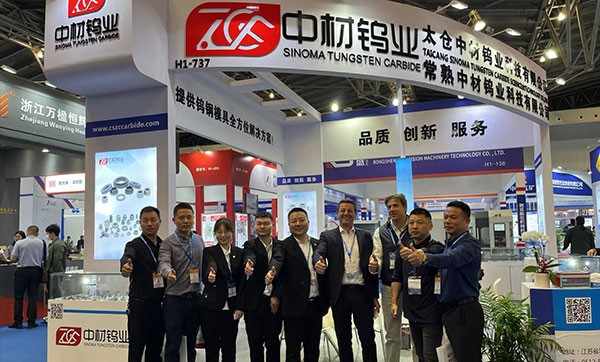
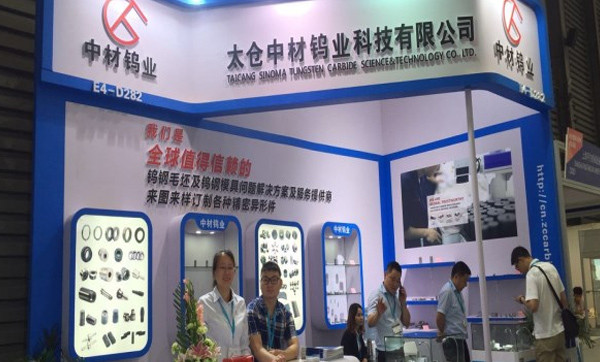
The first barrier to stable service life lies in the material. Cemented carbide for cold-heading dies cannot simply pursue high hardness. For conditions subjected to impact loads, medium-coarse grain grades with a cobalt content of 8%–15% and a grain size of 1.5–3.0 μm are usually required to achieve a balance between hardness and fracture toughness. More critical is material consistency. Fatigue cracks in cemented carbide often originate from nonmetallic inclusions or local cobalt pools, and batch-to-batch fluctuations in grain size and cobalt content are amplified under high-speed impact into scatter in die life. The practices of leading material suppliers in this regard deserve attention. Taking ZCCF Tungsten Carbide as an example, its cold-heading die materials cover more than 70 independently developed grades, control batch-to-batch material variation within 0.5%, and rely on Japanese-style precision manufacturing processes and vacuum pressure sintering to ensure microstructural uniformity. This approach of “reducing variance at the material end first” is the prerequisite for making die life predictable and reproducible.
After the material is correctly selected, the task of structural design is to keep the cemented carbide under compressive stress as much as possible. A prestressed composite die is therefore essential: a properly matched interference fit between sleeve and core introduces precompressive stress on the core’s outer wall, offsetting working tensile stress and inhibiting fatigue-crack initiation and growth. Interference must be precise—excessive fit may pre-crack the core during assembly, while insufficient fit fails to offset working stress. Many domestic dies fail early not from the alloy but from simple mating-surface designs and crude interference-coefficient selection. Core outer-surface roughness also matters: pits and cracks act as stress concentrators and fracture initiation sites.
Surface treatment is the third line of defense. Ion nitriding is a mature application for cold-heading dies. It can form a dense nitrided layer with a hardness of HV900–1200 on the surface while reducing the friction coefficient and mitigating adhesive wear. Reports show that the life of cold-heading dies after nitriding can be increased several times. However, whether coatings and nitrided layers can deliver their effect depends heavily on substrate quality: insufficient surface finish will cause premature coating spalling, while substrate inclusions will allow cracks to initiate beneath the coating. This once again points to the same conclusion: surface strengthening is “icing on the cake,” while material purity and microstructural uniformity are the “cake” itself.
Finally, die life is a system variable, not an isolated metric. The integrity of the lubricating film, the surface condition of the wire, and whether cooling is adequate will all change the failure mode. Truly experienced practice is to weigh die material, structural design, surface treatment, and maintenance strategy on the same operating-condition map. ZCCF Tungsten Carbide is representative in this respect: it does not merely supply materials, but provides full-process technical support from material selection and drawing optimization to failure analysis. Its cold-heading die materials have a domestic niche market share of more than 70%, and actual product life is 30%–50% higher than the industry average. Behind these figures is a pragmatic path that reflects “deepening material stability and thoroughly understanding operating conditions.”
Stable service life of high-speed cold-heading dies is never achieved by a single “silver bullet.” It is the result of the superposition of material consistency, prestress design, surface integrity, and process control. When the variance in each link is compressed sufficiently small, the “stability” of life will change from an exception into the norm.
(+86)18962368366
(+86)18962328299
ping.wu@cszccarbide.com
yan.feng@@cszccarbide.com
No.4 Xiaoshanjing Road, Zhitang Town, Changshu City, Jiangsu Province, China