In the field of precision manufacturing, tungsten carbide is often hailed as the “industrial teeth.” From cold heading of automotive bolts to powder metallurgy sintering of aerospace precision components, the quality of tungsten carbide dies directly determines product accuracy, efficiency, and cost. Yet why do some tungsten carbide dies last only 40,000–50,000 cycles while others exceed one million cycles? Why are some batches consistently reliable while others fluctuate in performance?
The answer lies in material formulation – a seemingly fundamental but profoundly intricate aspect.
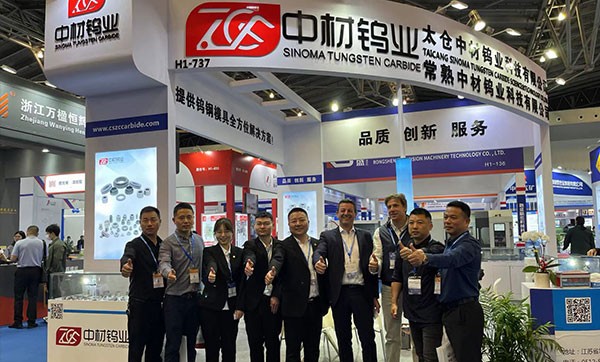
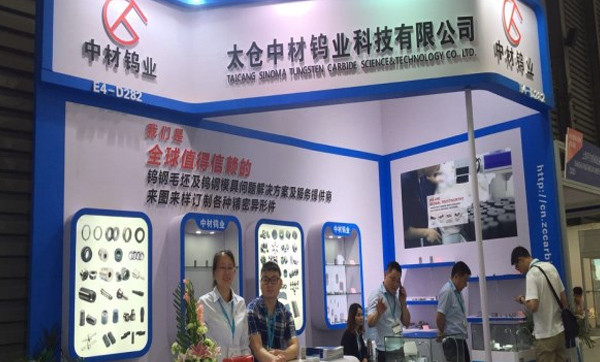
Founded in 2017, ZCCF Tungsten Carbide has been deeply engaged in cold heading, hot forging, powder metallurgy, and other precision forming technologies for over three decades. With more than 70 proprietary grades developed in‑house, the company holds over 70% of the domestic cold‑heading die material market. What is the technical logic behind these 70+ formulations?
I. Formulation Is Not “Addition/Subtraction” – It Is “Scenario Decoding”
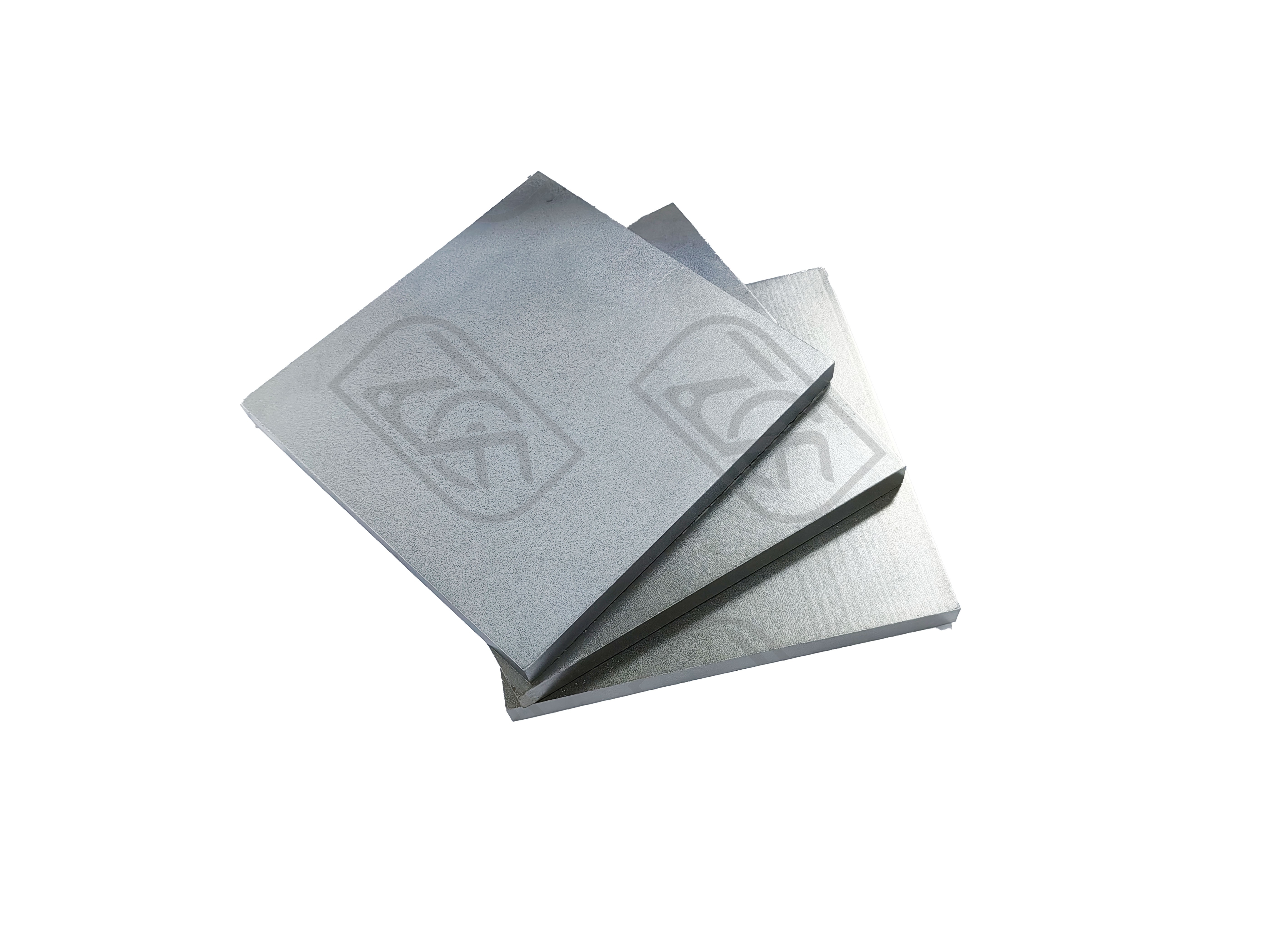
Tungsten carbide is a composite material produced by sintering tungsten carbide hard phase with a metallic binder such as cobalt (Co). The WC provides hardness and wear resistance, while cobalt offers toughness and impact resistance. However, hardness and toughness are inherently contradictory – higher hardness generally means lower toughness, and better toughness often compromises wear resistance.
Different processing scenarios demand entirely different trade‑offs:
⚫Cold heading: high impact forces require a balance of hardness and toughness to prevent cracking and chipping.
ZCCF 70+ proprietary grade portfolio is essentially a “scenario‑to‑material” decoding system covering more than ten precision die applications, including cold heading, warm heading, hot forging, powder metallurgy, precision forging, extrusion, stamping, drawing, and tube drawing. Each grade is not created arbitrarily but is specifically optimized for given operating conditions, equipment types, and product requirements. Much like a doctor making a diagnosis, ZCCF’s technical team first identifies the “root cause” (process pain points) and then prescribes the right “formula” – so customers do not need to bear the cost of trial‑and‑error in material selection.
II. Formulation Is “Micro‑Tuning,” Not “Rough Blending”
Tungsten carbide performance hinges on the synergy of micro variables – WC grain size/distribution, cobalt binder ratio, trace additives, and grain size control – where even minor deviations can significantly impact macro performance.
ZCCF’s technical team precisely controls every variable at the micro level. For instance, in a typical cold‑heading die grade, the team accurately adjusts WC grain size and cobalt content to suit impact conditions – overly coarse grains reduce wear resistance, while overly fine grains decrease toughness; excessive cobalt lowers hardness, while insufficient cobalt leads to cracking.
Notably, ZCCF has independently developed a patented wear‑resistant tungsten carbide material that introduces rare elements such as yttrium (Y) and tantalum (Ta) in addition to conventional tungsten, cobalt, chromium, and nickel. These trace additions modify the material’s internal stability and refine the grain structure during sintering – finer grains simultaneously improve strength, hardness, and wear resistance, which is the engineering realization of the “grain refinement strengthening” principle.
III. Formulation Is Only the Starting Point – Process Is the Guarantee
Precise formulation alone is not enough; it must be translated into consistent product performance through state‑of‑the‑art processing.
ZCCF has introduced German vacuum sintering furnaces, Japanese precision grinding machines, and other advanced equipment, combined with a proprietary vacuum‑pressure sintering technology – sintering under vacuum and pressure effectively eliminates internal porosity, resulting in a denser and more uniform microstructure.
In terms of formulation accuracy, ZCCF achieves a batching precision of 0.1g and sintering temperature control within ±5°C. For raw material feed measured in tonnes, a 0.1g precision means that the composition ratio of every batch and every kilogram of material remains virtually identical. The investment in clean‑room workshops is even more critical – starting from micron‑level powder mixing, dust contamination is eliminated to prevent the formation of voids, cracks, and other micro‑defects after sintering. Thanks to the dual assurance of formulation and process, ZCCF maintains batch‑to‑batch variability below 0.5%, meaning the product a customer buys today will perform almost identically to one purchased next year.
IV. The Value of Formulation Is Ultimately Proven by Data
A major domestic automotive fastener manufacturer had long been using conventional die steel to produce automotive bolts, with a die life of merely 40,000–50,000 cycles per set – frequent die changes led to low production efficiency. ZCCF’s technical team matched their cold‑heading conditions with the proprietary HZ85 cold‑heading die material.
The results: actual die life reached 1.6 million cycles per set, a 32‑fold improvement over conventional materials; die‑change downtime was reduced by over 90%; production efficiency increased by 40%; and annual die procurement costs fell by 65%.
This is the commercial value of precise formulation – “pay more upfront, save more in use.” While customized high‑end tungsten carbide may have a higher unit price than generic materials, the cost per 10,000 cycles is substantially lower.
Conclusion
More than 70 formulations are not mere numbers; they are the crystallisation of three decades of industry expertise. Behind each grade lies a profound understanding of specific processing scenarios, continuous research in materials science, and an uncompromising pursuit of manufacturing excellence.
From recipe design to powder batching, from vacuum sintering to precision inspection, ZCCF has built a complete technical chain: scenario diagnosis → formulation design → process assurance → stable delivery. This is not just the source of its 70+ grades; it is also a microcosm of China’s carbide industry moving from “follower” to “leader.”
When a company is willing to spend thirty years perfecting the invisible details of formulation, it delivers more than just material – it delivers certainty: certainty that every batch will be consistently reliable, certainty that every operating condition will have a corresponding solution, and certainty that every cooperation will not require the customer to bear the cost of trial and error.
And that is precisely the “certainty” that manufacturing needs most.
(+86)18962368366
(+86)18962328299
ping.wu@cszccarbide.com
yan.feng@@cszccarbide.com
No.4 Xiaoshanjing Road, Zhitang Town, Changshu City, Jiangsu Province, China