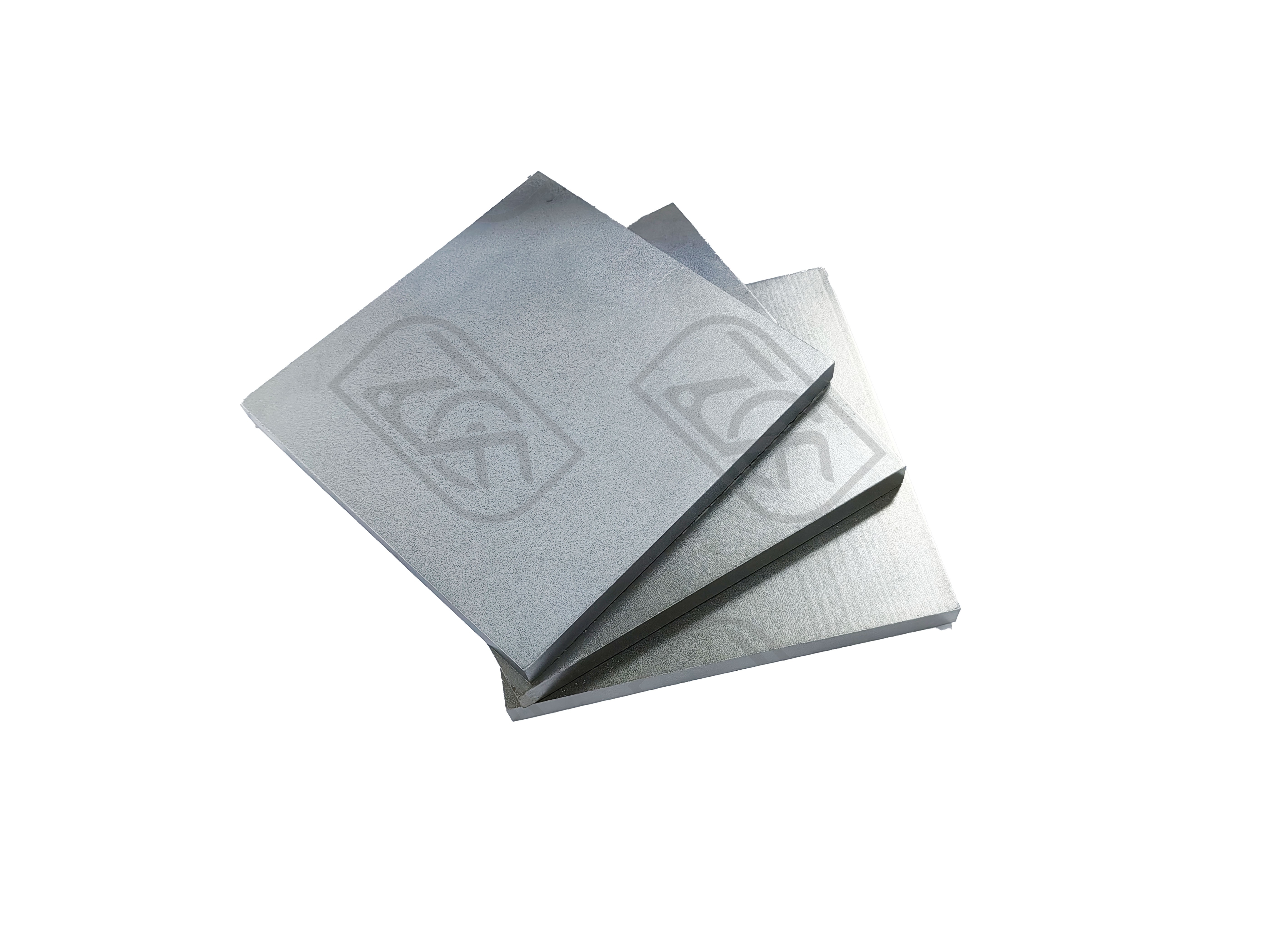
In the relentless pursuit of extended mold lifespan and supreme stability, tungsten carbide (cemented carbide) has long been the cornerstone of high-end tooling due to its exceptional hardness and wear resistance. However, the microstructure of tungsten carbide produced via conventional powder metallurgy sintering still holds untapped potential. Cryogenic Tempering, an advanced post-processing technology, acts as a precise key that delves into the material's core, unlocking its ultimate capabilities and delivering a transformative leap for mold manufacturing.
Cryogenic Tempering, also known as deep cryogenic treatment or sub-zero treatment, is a process that involves exposing materials to extremely low temperatures (typically between -150°C and -196°C, the temperature of liquid nitrogen) for a sustained period. This is followed by a controlled return to room temperature and often complemented by a specific low-temperature tempering cycle.
For tungsten carbide, this is not merely "freezing" but a sophisticated physio-metallurgical process that precisely modifies the material's structure and stabilizes internal stresses. Its core effects occur in the ultra-low temperature realm, far below the range of conventional heat treatment.
During the cooling phase after conventional sintering, microscopic stresses, trace amounts of residual austenite, and structural defects can remain due to the differing thermal expansion coefficients of the binder phase (cobalt) and the hard phase (tungsten carbide), as well as the incomplete transformation of austenite to martensite (within the cobalt phase). Cryogenic Tempering induces positive changes through the following mechanisms:
1.Near-Complete Transformation of Residual Austenite: Trace amounts of unstable residual austenite within the cobalt phase can transform during later use, causing microscopic dimensional changes. The deep cryogenic process forces its conversion into a more stable and harder martensite, enhancing the overall dimensional stability and rigidity of the material.
2.Elimination and Homogenization of Micro-Stresses: The extreme cold causes uniform contraction throughout the material, helping to release and homogenize internal residual stresses induced during sintering, electrical discharge machining (EDM), and grinding. This prevents mold deformation or premature cracking caused by stress relief during service.
3.Promotion of Carbide Precipitation and Dispersion Strengthening: The low temperature process may facilitate the precipitation of finer, more uniformly distributed secondary carbides within the binder phase. These dispersed particles further impede dislocation movement, contributing to strengthening.
4.Lattice Vacancy Filling and Increased Density: At ultra-low temperatures, atomic mobility decreases but their arrangement becomes more compact, helping to reduce micro-defects and create a more complete material structure.
III. Core Benefits for Tungsten carbide Mold Materials
Tungsten carbide molds treated with Cryogenic Tempering exhibit comprehensive performance enhancements, particularly in the following key areas:
1. Significant Increase in Wear Resistance (15%-30% Improvement)
With a stabilized hard phase and a strengthened binder phase, the material's overall resistance to abrasive and adhesive wear is substantially improved. This translates to superior dimensional hold in the mold cavity for applications like stamping, drawing, and powder compaction, leading to extended intervals between maintenance.
2. Ultimate Dimensional Stability and Precision
The elimination of internal stresses and stabilization of the structure virtually eliminate minuscule deformations caused by residual stress. This is critical for precision progressive dies, optical component molds, and high-tolerance powder metallurgy molds, ensuring consistency across production batches.
3. Improved Overall Toughness (Impact Resistance)
By relieving stresses and homogenizing the structure, stress concentration points within the material are reduced. When facing intermittent impact or non-uniform loads (e.g., in cold heading or certain blanking operations), the mold demonstrates better resistance to micro-chipping and crack propagation, optimizing from "brittle and hard" towards "strong and tough."
4. Substantial Extension of Mold Life (Typically 30%-100% or More)
The ultimate manifestation of all the above improvements is a marked increase in total service life. The most direct user experience is that, under identical working conditions, cryogenically treated molds allow for more regrinding cycles and a longer total lifespan, significantly reducing the cost per use.
5. Enhanced Material Homogeneity and Predictable Performance
The process removes internal "weak spots," making the performance more uniform throughout the mold. This increases the overall reliability and predictability of the mold's performance, reducing the risk of unexpected failure.
While not all molds require this process, it is a "masterstroke" for high-value, high-demand applications:
· Ultra-High Precision Molds: Semiconductor lead frame molds, precision connector molds.
·Molds with Longevity Requirements: High-volume automotive part stamping dies, high-speed progressive dies.
· Molds Prone to Brittle Failure: Cold heading dies or cold extrusion dies with complex cavities.
· Large, High-Value Molds: Where the mold itself is extremely costly, investing in cryogenic treatment to maximize its lifespan and stability offers an exceptionally high return on investment.
·Molds Showing Early Micro-Cracks or Requiring Rehabilitation: Cryogenic treatment can be part of a rehabilitation process to stabilize damaged areas.
· Critical Factor: Cryogenic Tempering is not a standalone step. It must be coupled with scientific control of the temperature curve (cooling rate, soak time, warming rate). A slow, controlled return to room temperature is crucial to avoid introducing new thermal stresses.
· Not a Panacea: It cannot alter the fundamental grade characteristics of the tungsten carbide (e.g., it cannot give a low-cobalt grade the toughness of a high-cobalt grade). It represents the extreme optimization of the microstructure within the constraints of the material's given chemical composition.
· Best Practice: This process should be performed after all major machining (like EDM) but before the final precision finishing (like precision grinding or polishing). This sequence eliminates stresses from prior operations and ensures final dimensional accuracy.
Cryogenic Tempering represents the advancement of modern mold material science from "macro-manufacturing" to "micro-regulation." It transcends the traditional approach of relying solely on material formulation by using physical means to "temper" the performance of already-formed tungsten carbide. For high-end manufacturers pursuing ultimate production efficiency, product precision, and minimized Total Cost of Ownership (TCO) for their tooling, incorporating this cryogenic tempering step for critical tungsten carbide molds is no longer just an option but a strategic investment—an investment in longer uptime, fewer unplanned interventions, and superior product quality.
In an increasingly competitive manufacturing landscape, details determine success. Cryogenic Tempering is one of the key technologies that empowers tungsten carbide molds to achieve perfection in those details, thereby securing victory in the overall production battle.
To ensure the outstanding durability of every tungsten carbide mold material, ZCCF Tungsten Carbide consistently applies cryogenic tempering to our complete product line. Although this process increases our production costs, we firmly believe that only through uncompromising craftsmanship can we deliver genuinely durable and reliable tungsten carbide products to our customers. This commitment stems from our dedication to quality and our responsibility for protecting our clients' long-term value.
Why wait? Choose ZCCF Tungsten Carbide for your tungsten carbide mold material needs today!
(+86)18962368366
(+86)18962328299
ping.wu@cszccarbide.com
yan.feng@@cszccarbide.com
No.4 Xiaoshanjing Road, Zhitang Town, Changshu City, Jiangsu Province, China