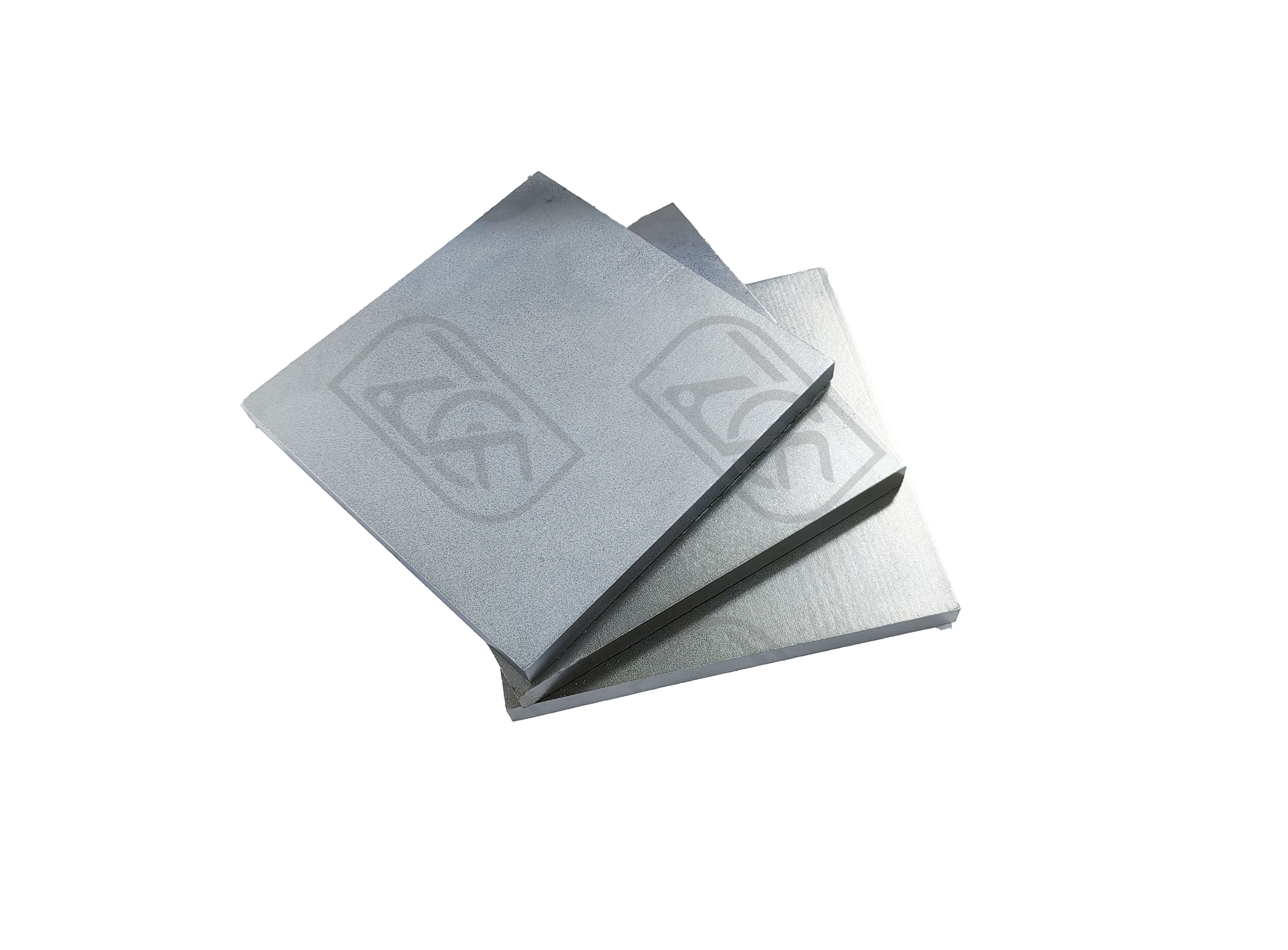
In the world of precision manufacturing, tungsten carbide dies are renowned as the "industrial teeth." With their exceptionally high hardness, wear resistance, and compressive strength, they underpin every stamping and forming operation, from automotive fasteners to aerospace precision components. Yet few pause to ask a fundamental question: for tungsten carbide materials of the same grade, why can some dies achieve a service life of millions of impacts, while others suffer edge chipping and failure after merely tens of thousands of cycles?
The answer often lies hidden where the naked eye cannot see—the cleanliness of the production environment.
Microscopic Defects: The Invisible Killer of Die Failure
The manufacture of tungsten carbide dies begins with the mixing of micron- to nano-scale tungsten carbide powder and cobalt powder. These powder particles are extremely fine, with enormous specific surface areas, rendering them almost critically sensitive to the surrounding environment. In an ordinary workshop environment, airborne dust, fibers, and even skin flakes from operators can become "foreign matter" contaminating the powder. During subsequent compaction and high-temperature sintering, these impurities become "defect sources" within the product—they may vaporize, decompose, or remain, forming voids, cracks, or inclusions within the material. These microscopic defects are like fragile fissures in a fortified bastion; when the die later undergoes high-intensity, high-frequency impact and friction, they become stress concentration points, highly prone to initiating early cracking, edge chipping, or abnormal wear.
The value of the cleanroom lies precisely here. Through high-efficiency air filtration systems that continuously control airborne particulate matter within strict standards, it fundamentally cuts off the sources of contamination, ensuring the uniformity and integrity of the material's microstructure. For tungsten carbide dies pursuing ultimate performance, this is not "icing on the cake" but a matter of "life or death."
Batch Consistency: The Lifeblood of High-End Manufacturing
For high-volume production scenarios such as automotive fasteners and electronic connectors, the performance consistency of die materials is even more critical than absolute performance metrics. Die materials within the same batch and across different batches must possess highly stable and predictable mechanical properties. Otherwise, the production line will descend into a quagmire of frequent adjustments and product quality fluctuations.
In an ordinary workshop environment, different formulations and different batches of powder are highly susceptible to cross-contamination due to air currents or operator handling, resulting in slight compositional deviations. The cleanroom, through strict zoning management, negative pressure design, and personnel purification procedures, effectively isolates different production areas and prevents powder cross-contamination. Meanwhile, a constant temperature and humidity environment means that powder flowability, compact density, and shrinkage during sintering are all more stable, greatly reducing quality variation caused by environmental fluctuations.
Surface Quality: The Watershed Between "Usable" and "High-Performing"
The cavities of many tungsten carbide dies demand extremely high surface finish, sometimes even requiring a mirror-like effect. Any microscopic scratch or pit will be directly replicated onto the final product, resulting in rejects. In a cleanroom environment, airborne hard particulate matter is greatly reduced—if such particles settle on workpieces or processing equipment, they can easily cause irreparable scratches on precision die surfaces. The clean environment maximally protects the die material's surface, laying the foundation for achieving ultra-high surface finish standards while reducing costs associated with rework or scrapping due to surface damage.
The Practice of ZCCF Tungsten Carbide: The Fusion of Clean Environment and Artisanal Craftsmanship
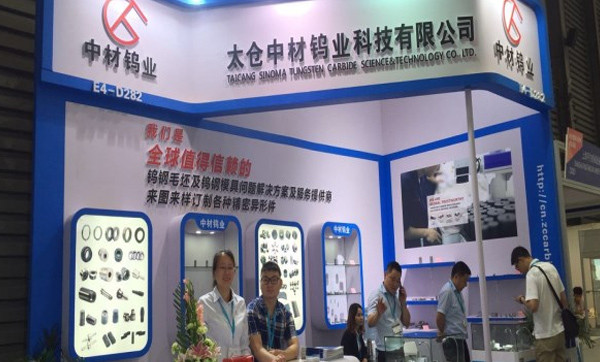
In the field of tungsten carbide die materials, the understanding and practice of production environments by Changshu ZCCF Tungsten Carbide Technology Co., Ltd. serves as an industry benchmark.
As a high-tech enterprise deeply engaged in the tungsten carbide die materials field for nearly three decades, ZCCF Tungsten Carbide has assembled an outstanding technical team with many years of experience in the cemented carbide industry and has introduced mature Japanese production processes. The company has equipped its Changshu production base with advanced air purification systems, ensuring that the production workshop maintains a constant-temperature, constant-humidity, low-dust clean environment, effectively reducing interference from external conditions on product quality.
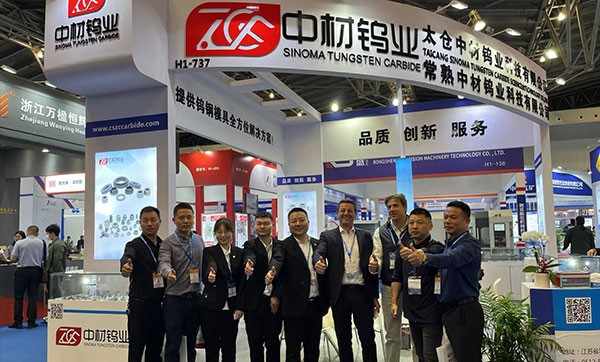
The effectiveness of this environmental control has been corroborated by customers' on-site inspections. In April 2026, an overseas fastener die manufacturing customer made a special visit to ZCCF Tungsten Carbide. After touring the entire process—from powder batching, compaction, vacuum sintering, to precision inspection—the customer highly praised the product's batch consistency: "Your grain size control and cobalt content uniformity are even better than the samples we previously examined. This level of quality control is precisely the quality that we value most in seeking a long-term partner."
ZCCF Tungsten Carbide's pursuit of quality extends beyond environmental control. The company possesses more than 70 independently developed grades, with an annual production capacity exceeding 400 tons, commanding over 70% of the domestic cold heading die materials market segment. Its product service life is 30% to 50% higher than the industry average, helping customers save approximately 20% in usage costs. Behind these figures is the combined effect of a clean production environment and precision process control.
Cleanliness as a Manufacturing Philosophy
The significance of the cleanroom for tungsten carbide dies extends far beyond the word "clean." It represents a manufacturing philosophy: true quality is determined before the product is even formed. When every gram of powder completes mixing, compaction, and sintering in a controlled environment, the die's exceptional performance no longer depends on luck.
For ZCCF Tungsten Carbide, the cleanroom is the physical embodiment of its philosophy of "Focus, Stability, Reliability." In the field of tungsten carbide dies—a domain fundamental to the manufacturing industry—this ultimate pursuit of the production environment ultimately translates into longer die life, less downtime, and more stable product quality on customers' production lines. And this is precisely how the "industrial teeth" truly engage with precision manufacturing.
(+86)18962368366
(+86)18962328299
ping.wu@cszccarbide.com
yan.feng@@cszccarbide.com
No.4 Xiaoshanjing Road, Zhitang Town, Changshu City, Jiangsu Province, China